











Seashell Still Life Photography: A Macro Photography Guide – Watch on YouTube
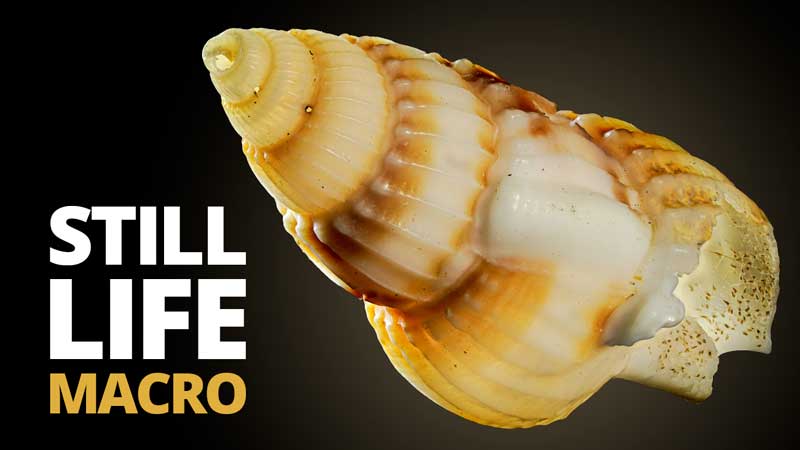
Seashells are fascinating subjects for macro photography. They are packed with texture, intricate patterns and subtle colours, yet they are often overlooked as photographic subjects. With a handful of shells, a macro lens and some carefully controlled lighting, it is possible to create a striking collection of still life images that showcase every detail.
This guide explores the techniques behind seashell still life photography, including lighting, focus stacking and simple editing methods that help transform ordinary shells into beautiful macro photographs.
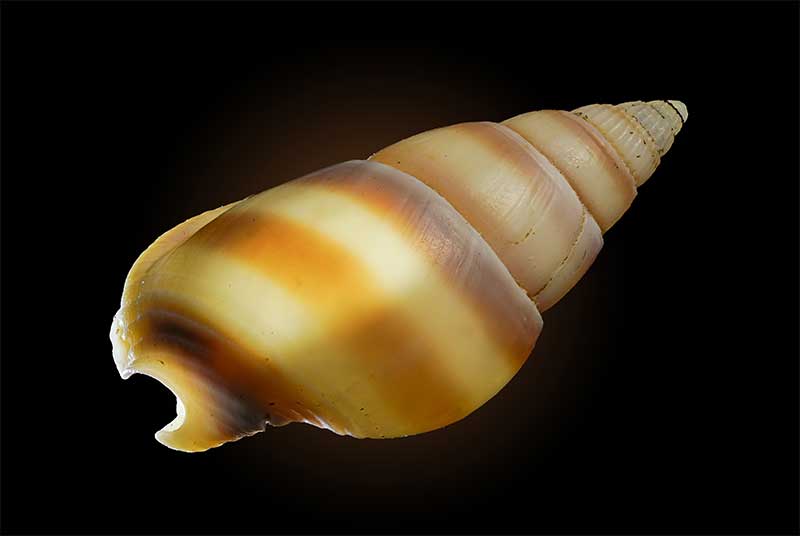
Why Try Seashell Still Life Photography?
One of the great advantages of seashell still life photography is that the subject never moves. Unlike insects or other living subjects, seashells allow unlimited time to experiment with lighting, composition and camera settings.
Every shell has its own unique shape and structure. Some are smooth and glossy, others feature deep ridges and complex textures. Many are also partially translucent, creating opportunities for creative lighting effects that reveal details hidden within the shell itself.
This combination of accessibility and variety makes seashells an ideal subject for both beginners and experienced macro photographers.
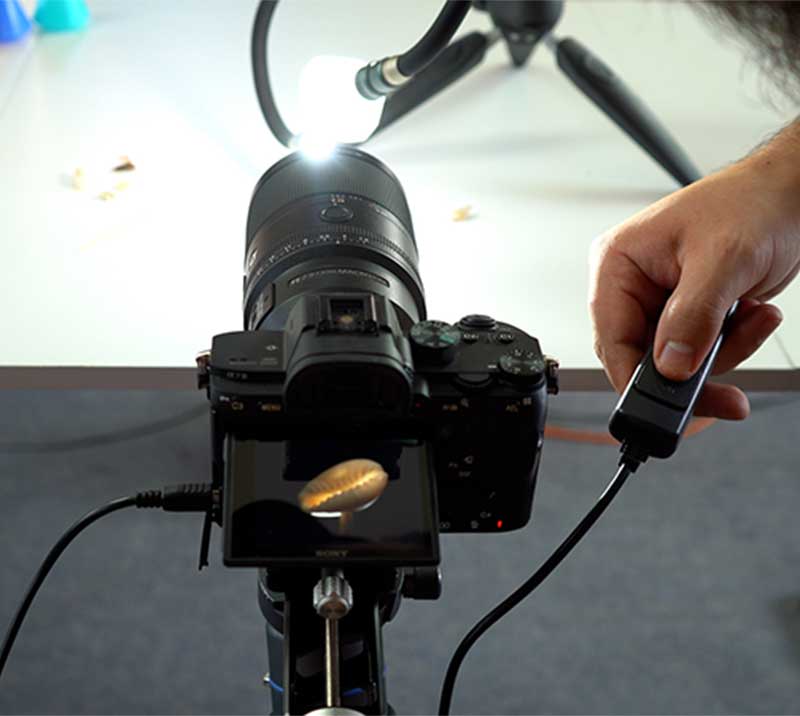
Preparing Your Seashell as a Subject
Presentation plays an important role in seashell still life photography. Rather than placing shells directly onto a surface, elevating them can create a cleaner and more professional result.
A simple cocktail stick can be used to support each shell while keeping the support easy to remove later. This allows the shell to be positioned at the perfect angle without distracting elements entering the frame.
Using a support makes post processing much easier. Removing a thin cocktail stick in Photoshop takes very little effort, allowing the seashell to appear as though it is floating in space.
The flexibility to adjust the height and angle of each shell is particularly useful when working with dramatic lighting.
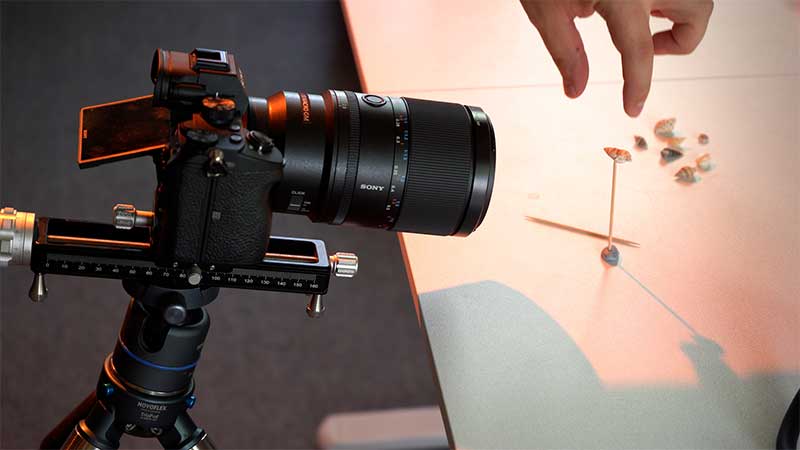
Choosing the Right Macro Lens
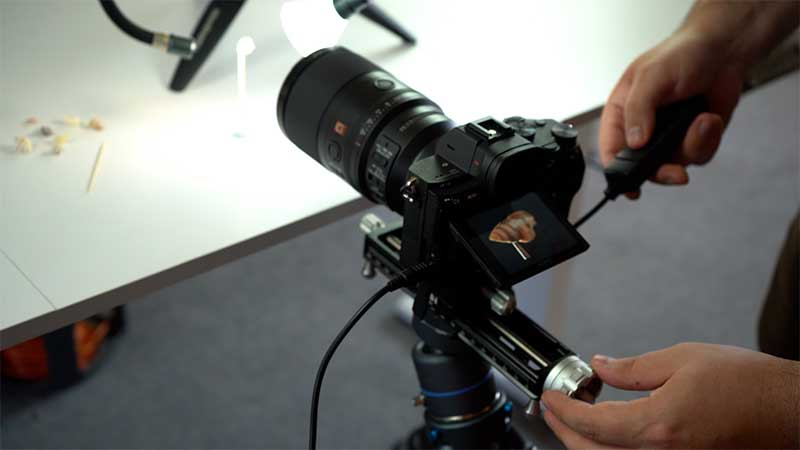
A dedicated macro lens is ideal for seashell still life photography. A focal length around 100mm provides a comfortable working distance while still offering enough magnification to fill the frame with smaller shells.
The additional space between camera and subject also leaves more room for positioning macro lighting around the scene.
The goal is to reveal fine textures and patterns that are not immediately visible to the naked eye. A quality macro lens paired with a sturdy tripod provides the stability needed to capture these details.
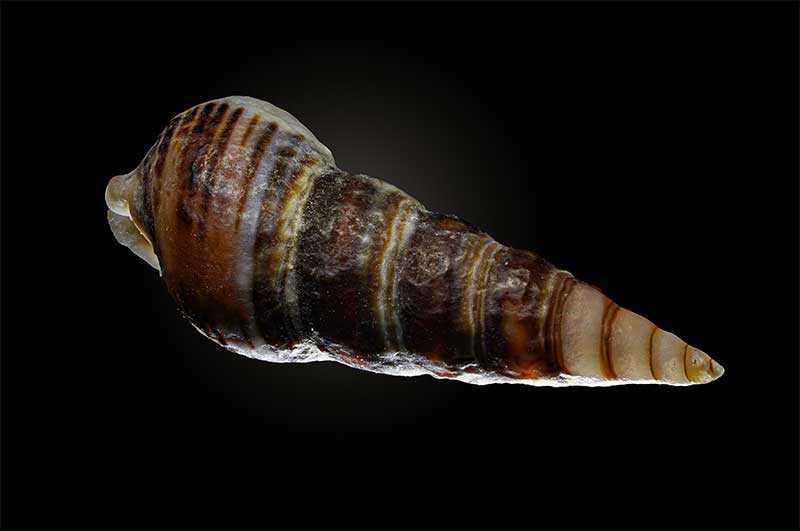
Focus Stacking for Complete Sharpness
Depth of field is one of the biggest challenges in macro photography.
Even at smaller apertures, large portions of a seashell can fall outside the focus plane. This is where focus stacking becomes particularly useful.
By capturing multiple images at different focus distances and combining them later, it becomes possible to create a photograph that is sharp from front to back.
A focus stacking rail simplifies the process by allowing precise camera movements between images. This technique is especially valuable when photographing highly detailed shells with deep ridges and spirals.
For seashell still life photography, focus stacking often provides a much cleaner and more detailed result than relying on a single exposure.
Lighting Seashells with the Adaptalux Studio
Lighting is where seashell still life photography becomes truly creative.
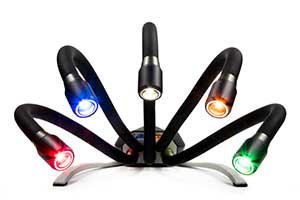
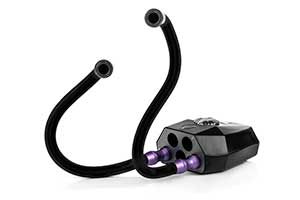
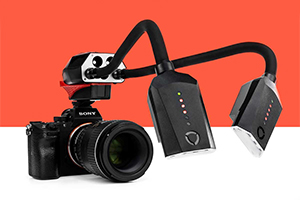
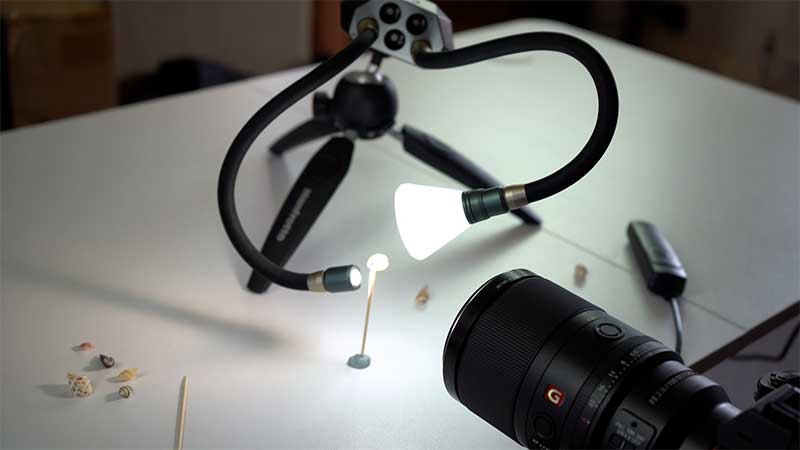
The Adaptalux Studio is particularly effective for this type of work because its flexible lighting arms allow precise positioning around small subjects. Tiny adjustments can dramatically change the appearance of highlights, shadows and textures.A simple setup using two lights works exceptionally well.
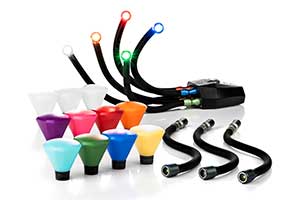
The first light serves as the key light. A diffused white lighting arm positioned toward the front of the shell reveals surface texture, colour and detail. The second light is placed behind the shell. This combination creates depth while emphasising the natural structure of the subject.
Using Backlighting to Create a Glow
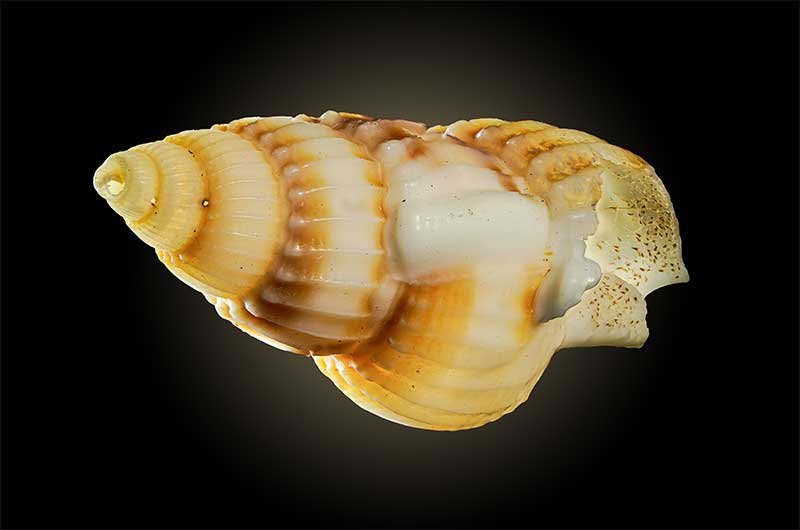
Many seashells contain translucent sections that respond beautifully to backlighting. When a light source is placed behind the shell, certain areas begin to glow as light passes through the structure. This reveals colours, patterns and textures that may be invisible under front lighting alone.
The effect is not necessarily a natural representation of the shell, but it is visually striking and highly effective in still life photography. A carefully balanced backlight can add depth and separation while creating an almost luminous appearance.
The flexibility of the Adaptalux lighting arms makes it easy to experiment with the exact position of the light until the desired effect is achieved.
Adapting the Lighting for Different Shells
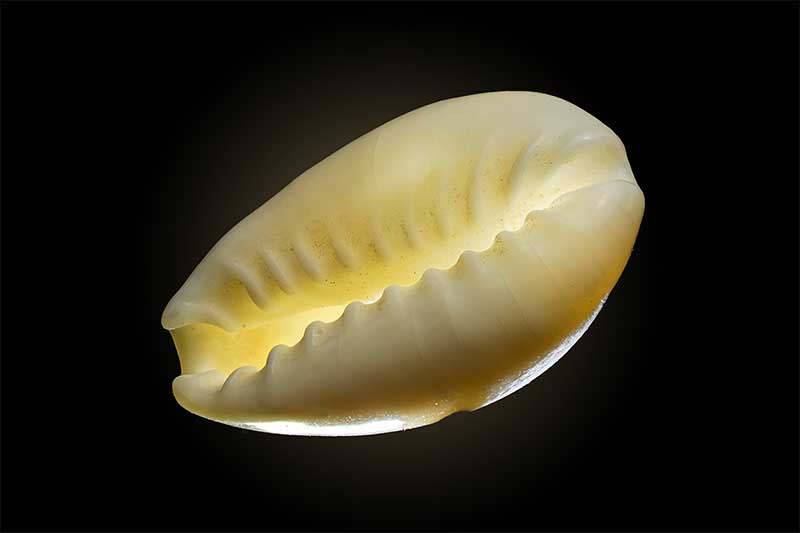
Every shell reacts differently to light. Light coloured shells often allow significant amounts of light to pass through them, producing a strong translucent glow. Darker shells are usually less cooperative and may require a different approach.
In some cases, only the thinnest sections become illuminated while the rest of the shell remains opaque. Fortunately, seashell still life photography does not require a completely new setup for every subject. Small adjustments to the position of the key light or backlight are often enough to maintain a consistent look across an entire series of photographs.
The ability to make these fine adjustments quickly is one of the key advantages of flexible macro lighting.
Adapting the Lighting for Different Shells
The editing process is usually simple. The first step is removing the support used to hold the shell in place. Because the support occupies such a small area of the image, this can normally be completed in just a few moments.
Once isolated from the background, the shell can be repositioned or incorporated into alternative compositions. Modern AI selection tools make this particularly straightforward when the subject is photographed against a dark background.
Some photographers prefer a completely black backdrop. Others choose to add a subtle radial gradient behind the shell to introduce a sense of depth while maintaining a clean appearance.
Either approach works well within seashell still life photography and ultimately comes down to personal preference.
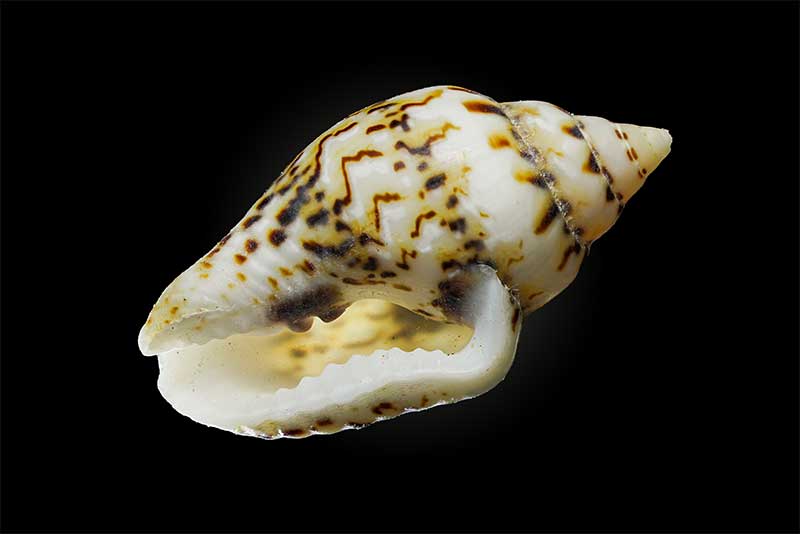
Experiment with Every Millimetre
Perhaps the most important lesson when photographing seashells is the value of experimentation.A light moved by only a few millimetres can dramatically alter the placement of highlights and shadows. Small adjustments often reveal new textures, improve translucency or bring out colours hidden within the shell.
Because the subject remains stationary, there is plenty of time to refine the setup and explore different creative possibilities. Taking that extra time to experiment is often what separates a good photograph from a truly memorable one.
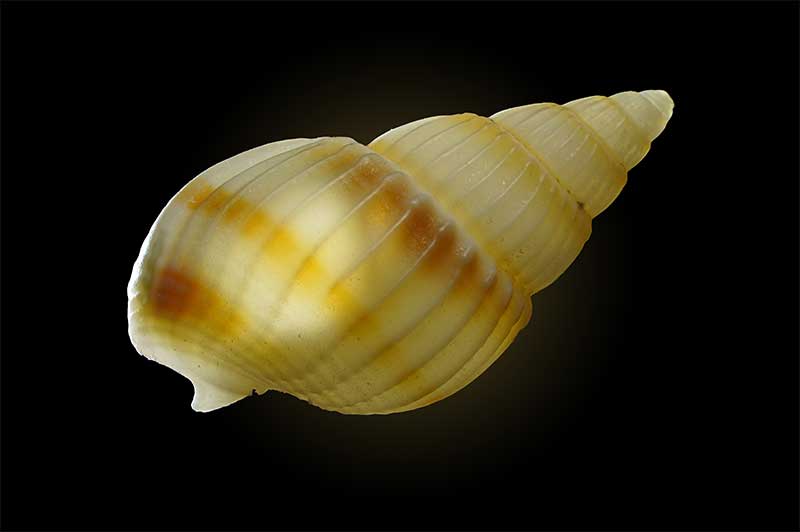
Seashell still life photography is a rewarding macro photography project that can be attempted almost anywhere. It provides an excellent opportunity to practise lighting control, focus stacking and composition while working with beautiful natural subjects.
By combining careful exposure, creative backlighting and flexible macro lighting from the Adaptalux Studio, it is possible to reveal extraordinary levels of detail and create a cohesive series of striking still life images.
Whether you are new to macro photography or simply looking for a fresh subject to explore, seashells offer endless opportunities for experimentation and creativity.
Remember to subscribe to our YouTube channel for regular macro photography tutorials, ideas and inspiration.

- Best Flexible LED Lighting for Macro Photography - 1st October 2026
- What’s inside your chocolate bar? – Food Macro with flexible LED Lighting - 27th September 2026
- Adaptalux Macro Lighting System vs Ring Lights for Macro Photography - 18th September 2026


