







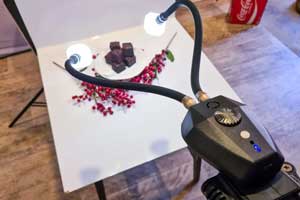
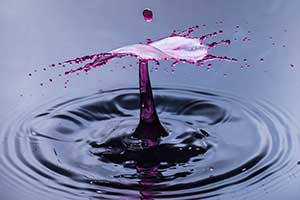


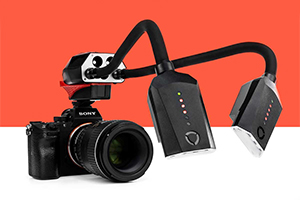
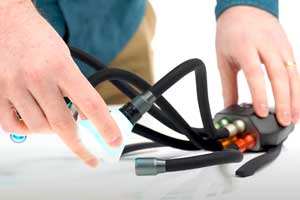

The Adaptalux Macro Lighting System and SmallRig RM03 Macro Photography LED Light are both designed to solve the same fundamental problem: getting controllable light into the tiny spaces where macro photography happens.
On paper, the SmallRig RM03 is an attractive budget option. It is compact, flexible, includes a surprisingly large selection of accessories and offers five colours in a single unit. For photographers who want an inexpensive way to add directional light to mushrooms, insects, miniatures or small products, it makes a lot of sense.
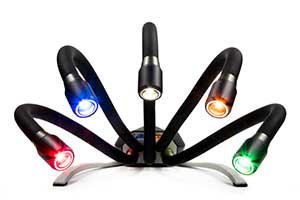
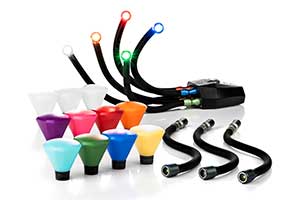
The Adaptalux system takes a different approach. Rather than being a single light, it is a modular lighting system built specifically around macro photography. This makes direct comparisons a little tricky as Adaptalux setups are tailored by the user to suit the exact shooting requirements. Adaptalux can be expanded to a wirelessly connected system of lights using any combination of Pods and Lighting Arms while also being able to match the same configuration of a smallrig RM03 if so desired. Adaptalux also offers dedicated white, coloured, UV and high-output Lighting Arms, plus diffusers and other magnetic modifiers.
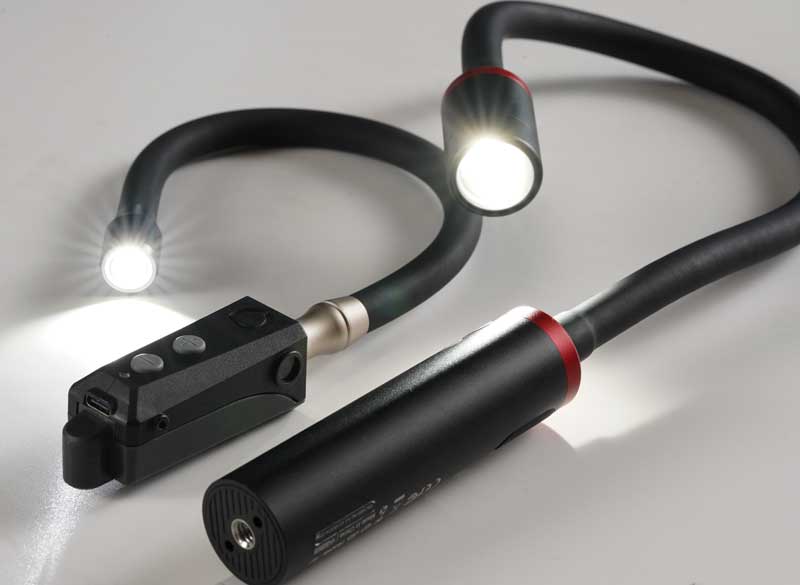
So which is better?
In this article we test both products side by side in the real world and break down the differences, advantages and disadvantages of each.
For a casual macro photographer looking for a low-cost portable light, the SmallRig RM03 is a compelling budget choice.
For photographers who need precise, repeatable and expandable lighting control, particularly those serious about macro photography, Adaptalux is the stronger system.
Adaptalux vs SmallRig RM03: specifications at a glance
Light Output
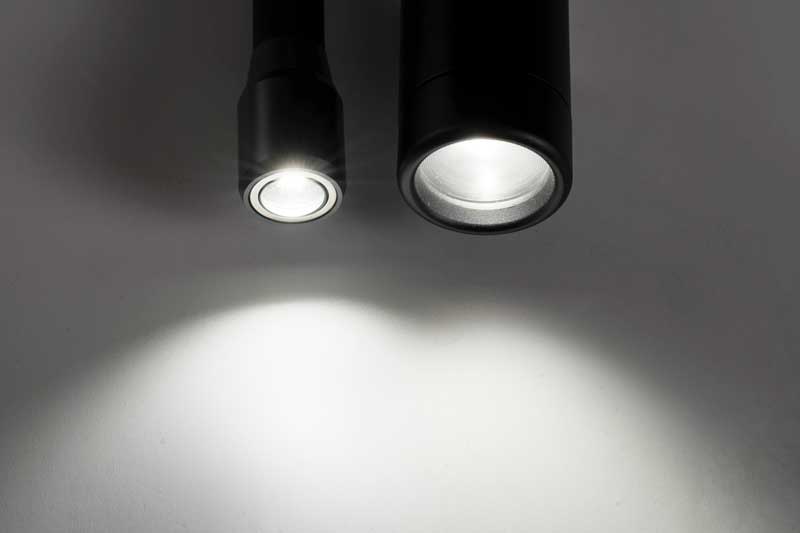
Brightness is surprisingly difficult to compare between these two products because SmallRig does not publish a lumen measurement for the RM03.
The RM03 specification lists a 3W LED power input, while Adaptalux publishes 2W for the standard white lighting arm. However staking power input as a measure of real-world brightness output is not ideal and does not factor in lenses, LED efficiency or quality.
In our tests the standard white lighting arm from Adaptalux is comparable in brightness to the RM03 without the spotlight. The Adaptalux Super Bright Lighting Arm is slightly brighter than the spotlight of the RM03.
Size and scale
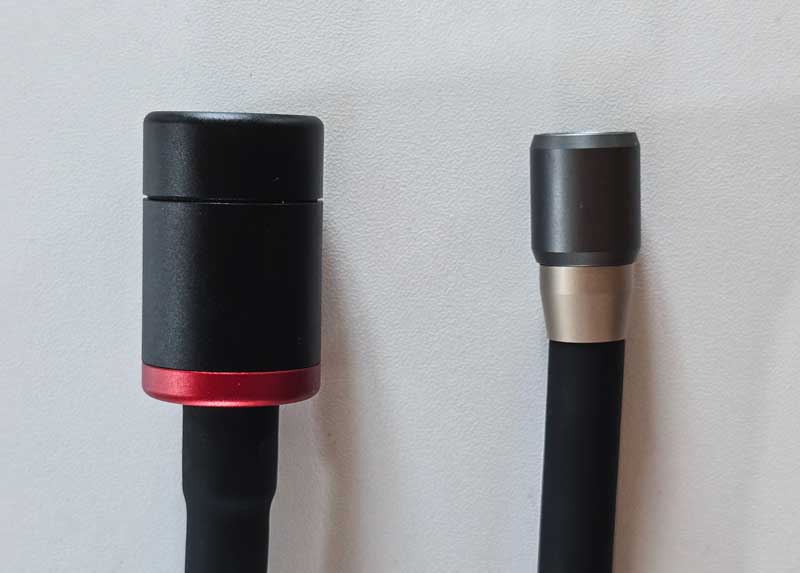
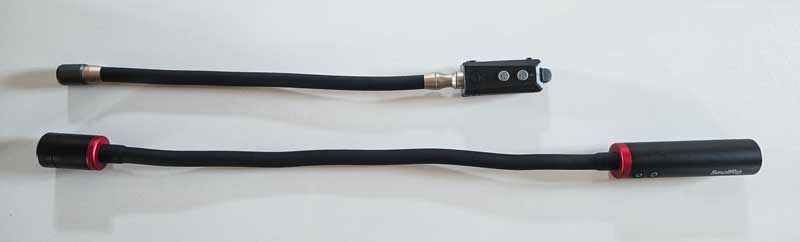
For macro photography, the size of the actual light head can matter as much as the overall size of the system.
The Adaptalux Lighting Arm has a very small light head at only 14mm, allowing it to fit into tight spaces around a macro subject without obstructing the camera or becoming difficult to position. This becomes increasingly valuable at higher magnifications, where the space between the lens, subject and lighting equipment can be extremely limited.
The smaller head also lets photographers bring the light source very close to tiny subjects, effectively scaling the size and character of the light for the subject being photographed along with drastically increasing effective brightness by being closer to the subject.
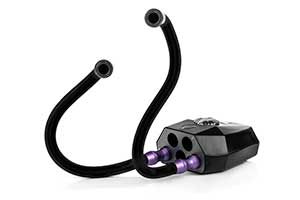
The RM03 is compact for a conventional light, but its much larger cylindrical head occupies more space around the subject and needs to be positioned much further back to avoid it being visible in your shot.
Brightness control
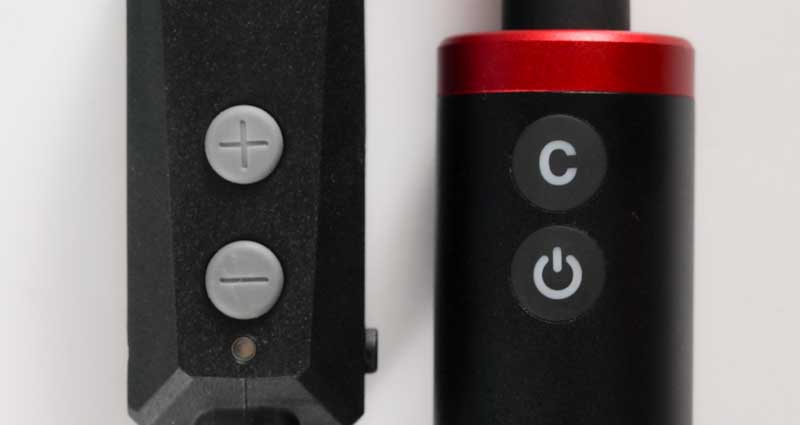
This is one of the largest differences between the two systems.
The SmallRig RM03 has five brightness settings: 20%, 40%, 60%, 80% and 100%. Pressing the power button cycles through five brightnesses at these pre-set levels.
That is simple and fast, but five fixed settings can be very restrictive when lighting extremely small subjects. Macro photography is often about very small changes in shadow density and highlight intensity.
Adaptalux takes a fundamentally different approach. Both the Control Pod 3.0 and the Pod Mini 2.0 provide incremental brightness control (0% to 100%) for each individual Lighting Arm, using its physical control dials or the Adaptalux Bluetooth app.
This means one arm can be dialled down to provide subtle fill light while another acts as the key light, with both adjusted independently. Having a full range of control from 0% to 100% is critically important when balancing light in an image.
Wireless control
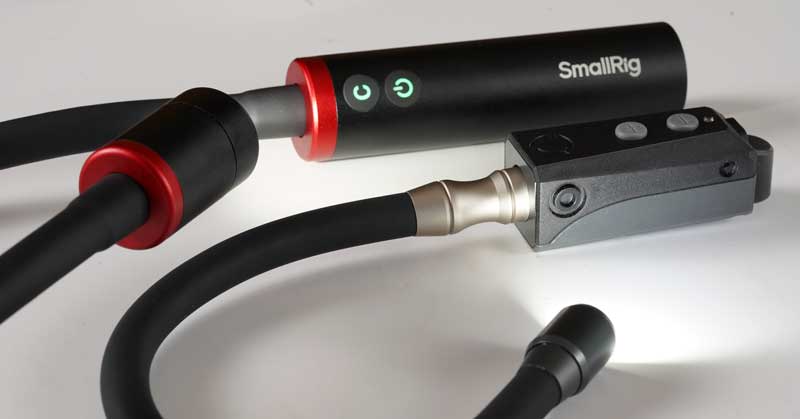
There is no Bluetooth control and no smartphone control system fir the SmallRig RM03. although Smallrig itself has suggested app-based brightness and colour control as a desirable feature and possible improvement for a future version of the RM03.
The Adaptalux Pod 3.0 and Pod Mini 2.0 both include Bluetooth and can be controlled remotely through the Adaptalux app. The system also supports multiple Pod connections, allowing multiple Pods to systems to be controlled from the app.
Wireless control becomes particularly useful when the lights are positioned deep inside a macro setup or when changing the position of a light would otherwise disturb the subject.
Colour accuracy
Both manufacturers quote a CRI rating of around 95, so this is one area where the two products are much closer.
SmallRig markets the RM03 as a CRI 95 light, and Adaptalux specifies 95 CRI for its LED Lighting Arms.
A CRI 95 rating is perfectly respectable for photography and represents a significant step above generic low-cost LED lighting.
However, Adaptalux provides a much more extensive range of dedicated white-light options, including 4000K warm white, 5700K daylight white and 6500K cold white versions.
For photographers reproducing the colour of flowers, insects, jewellery, specimens or products accurately, the quality and consistency of the white-light source matters more than simply having a high CRI number on the box.
Beam control
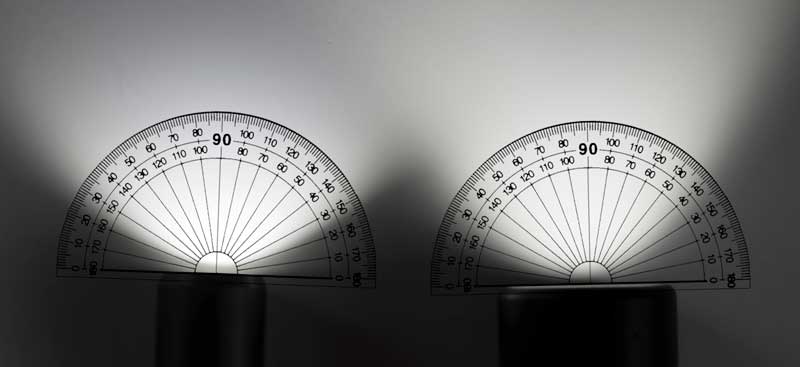
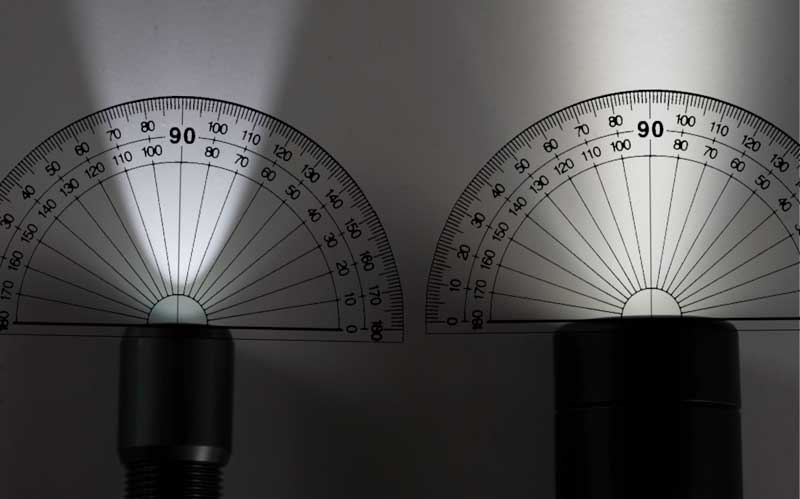
The RM03 has a focused, adjustable light head that allows the photographer to concentrate light into a small area. Moving the head changes how tightly the light is directed, making it useful for illuminating tiny subjects or creating a small pool of light.
Adaptalux offers beam adjustment too, but its Lighting Arms primarily limit and spread the light rather than focusing it into a tighter beam. The RM03 therefore provides more direct control over concentrating light where it is needed.
The RM03 also includes a spotlight and four-leaf barn door attachments, providing additional physical control over the shape of the beam.
Multi-light control
The RM03 can certainly be used as part of a multi-light setup. Two or three RM03s can be positioned around a subject, but each remains an independent light with its own five-step brightness control.
Adaptalux is designed around multi-light operation from the beginning. The Control Pod 3.0 has five Lighting Arm ports, and each arm can be controlled independently. The more comparable Pod Mini supports a single light like the RM03, but multiple Pod Minis can be connected together in the app to create a single unified lighting system.
Portability
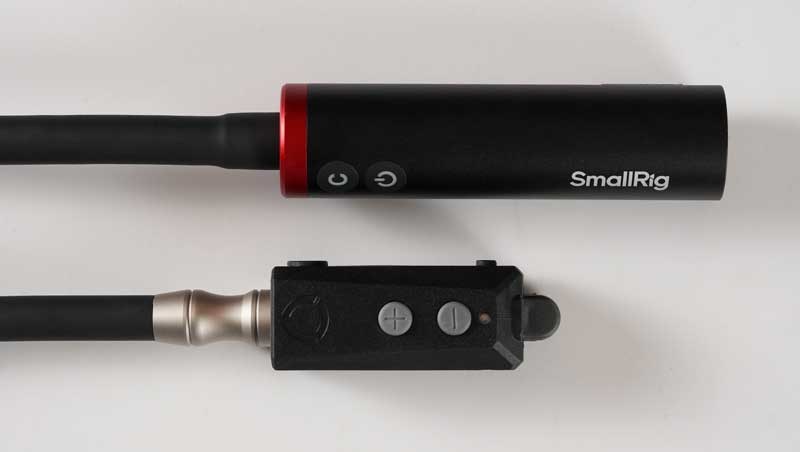
This metric comes down to personal preference. Do you want a single self contained unit that’s easy to grab, or several smaller, lighter components that can be backed away tighter?
The RM03 weighs approximately 300g and incorporates its battery, controls and flexible arm into the light itself.
A one-arm Adaptalux setup is much lighter ataround 150g (Pod Mini with 1x Arm), The modular nature of the Adaptalux products mean that they can be quickly broken down into single components to fit into smaller compartments and pockets to be assembled when needed.
So the RM03 is larger and heavier, but a single unit where as a comparable Adaptalux Setup is much lighter and smaller, but requires connecting an arm before use.
Sustained operation and Heat management
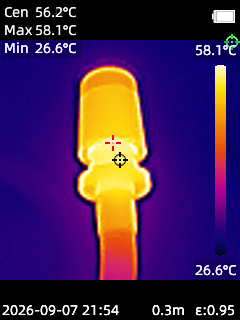
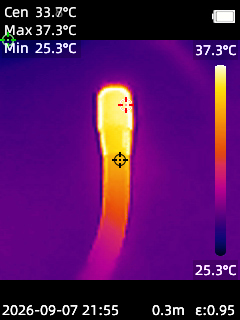
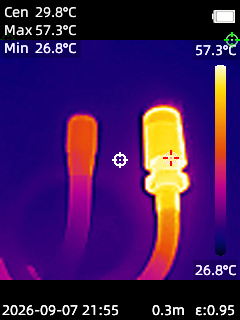
LED lighting converts electrical energy into light and heat, and sustained high-power operation can make thermal management important. This matters particularly in macro photography because the light is often positioned extremely close to the subject.
For this comparison, we tested the SmallRig RM03 at maximum brightness using a thermal camera and direct temperature measurements.
Test conditions:
Ambient temperature: 27°C
Runtime at 100%: 60 minutes
Adaptalux:
Maximum measured surface temperature: 45°C
Temperature above ambient: 18°C
SmallRig RM03:
Maximum measured surface temperature: 58°C
Temperature above ambient: 31°C
The result is important because macro lighting is often used continuously rather than for a brief burst. If the light becomes significantly hotter during sustained operation, that can affect how comfortably it can be positioned close to a subject and how practical maximum power is for longer sessions.
Modularity and long-term expansion
This is where the two products fundamentally diverge.
The RM03 is a standalone macro light. It can be combined with additional RM03s, but each light remains an independent unit.
Adaptalux is a modular lighting system. The same Control Pod can power different types of Lighting Arm, including different types of LED Lighting Arms, Xenon flash lighting and UV Lighting Arms.
That means a photographer can start with two white LED arms and later add colour, UV, additional diffusion or flash without replacing the core system.
For somebody buying their first macro light, that may not seem important and a single light might suffice.
For somebody building a serious macro lighting solution over several years, it is one of the biggest advantages of the Adaptalux approach and allows your lighting to grow alongside your needs as a photographer.
Ease of Use
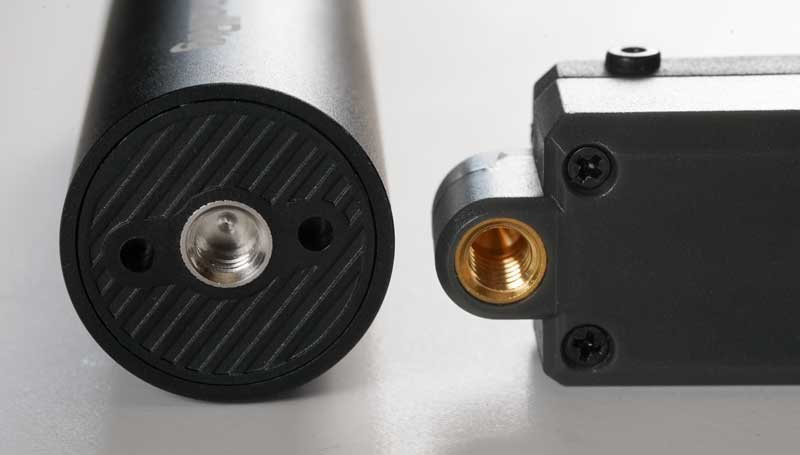
The RM03 is extremely straightforward. Turn it on, choose one of five brightness levels and select one of five colours. There are no additional parts, applications or additional setup.
For somebody who wants to illuminate a subject quickly without learning a lighting system, that simplicity is a big benefit.
As a system, Adaptalux has more controls because it does more. There’s still nothing complicated about the Adaptalux system, but it does take a little more thought than pressing the on button.
For simple lighting, the RM03 is easier.
For sophisticated lighting, Adaptalux gives the photographer substantially more to work with but at the cost of a little more setup.
Value for Money
The SmallRig RM03 is a good budget macro light for £45-£50 and is more capable than its Chinese manufactured origins might suggest. Its low cost, flexible arm, adjustable beam, colour options and included accessories make it an attractive option for photographers who are just getting started with macro photography, need a quick lighting solution or want a compact light for occasional work.
However, it is important to look beyond the price of a single light.
A Pod Mini 2.0 and White Lighting Arm form the basic building blocks of an Adaptalux setup, and Adaptalux gives buyers a 15% discount when purchasing a setup. This puts the cost of entry at around £130 before the discount.
However, the price difference is not simply a case of comparing one inexpensive RM03 with a higher cost, high-end system. Even an entry-level Adaptalux setup provides a much more robust solution for serious macro photography with a path to add more lights as your photography develops.
The RM03 is the cheaper route to getting a usable macro light but it remains primarily a self-contained single unit. Its five limited brightness levels, lack of wireless control and lack of multi-light integration will quickly become restrictive as your macro photography develops.
With Adaptalux, additional Lighting Arms and Pods can be added to the same system as you need them.That makes Adaptalux more of a system investment than a single-light purchase. You can start with a simple setup and expand it rather than replacing the original light when you need more control.
For beginners on the tightest budget, the SmallRig RM03 remains excellent value.
For photographers who expect their interest in macro lighting to grow, Adaptalux offers better value over the longer term because the initial investment becomes the foundation of an expandable, professional lighting system rather than a standalone light.
SmallRig RM03 or Adaptalux: which should you buy?
Choose the SmallRig RM03 if:
The RM03 makes sense for photographers who want an affordable, compact macro light and do not need a multi-light setup.
It is particularly attractive for casual outdoor macro photography, mushrooms, flowers and creative photography where simplicity and portability are more important than precise control.
The RM03 is also a good option for somebody who wants to experiment with macro lighting without investing in a larger modular system.
Choose Adaptalux if:
Adaptalux is the better choice for photographers who intend to take macro lighting seriously and want full control over the light in their images.
The ability to independently position and control multiple Lighting Arms, adjust brightness continuously, control lights over Bluetooth, use different light colours and outputs, and expand the system with additional LED, UV and flash Lighting Arms makes it much more suitable for all kinds of macro work.
It is especially compelling for macro enthusiasts and professional photographers who are interested in indoor or outdoor shoots. While Adaptalux is ideal for mushroom and flower photography too, it is also capable of shooting insects, product photography, toys and abstract work along with focus-stacking workflows and anyone who needs repeatable lighting setups.
The bottom line
The SmallRig RM03 is a good budget macro light. It is inexpensive, portable and surprisingly well equipped for a mass produced, Chinese manufactured product. It can produce great photographs in the right hands.
The Adaptalux Macro Lighting System is the better choice for serious macro photography because it provides significantly more control over brightness, positioning, multiple light sources and system expansion. It also has dedicated UK based design, manufacturing and support from a team of photography experts.
The most important distinction is not simply that one light is brighter than the other.
It is that the RM03 is primarily a self-contained light, while Adaptalux is a complete macro lighting system.
For photographers who simply need additional illumination, the SmallRig RM03 is an excellent value option.
For photographers who want to shape and control light precisely around a macro subject, Adaptalux is a much more capable long-term investment.

- Best Flexible LED Lighting for Macro Photography - 1st October 2026
- What’s inside your chocolate bar? – Food Macro with flexible LED Lighting - 27th September 2026
- Adaptalux Macro Lighting System vs Ring Lights for Macro Photography - 18th September 2026


