









Ants Farming Aphids – A Macro Photography Exploration – Watch on YouTube
One of the greatest things about macro photography is that it encourages us to slow down and pay attention to details that are easy to miss. Even during a dry summer woodland walk, there is often something fascinating happening on a tiny scale.
A perfect example is the remarkable relationship between ants and aphids. At first glance, it can look like a random gathering of insects on a plant stem. With a closer look, however, you discover one of nature’s most interesting partnerships, and a fantastic subject for ants farming aphids macro photography.
In this Article
- Why ants farm aphids
- How to photograph ants and aphids
- Camera and lens setup for Insect Photography
- How to light insects
- Using multiple lights outdoors
- Using coloured light to add visual interest
- Controlling macro lighting remotely
Equipment Used.
Camera
- Sony A7III
- Sony 100mm f/2.8 Macro
- Sony 2× Teleconverter
- Manfrotto ONE Tripod
Lighting
Discovering an Aphid Farm
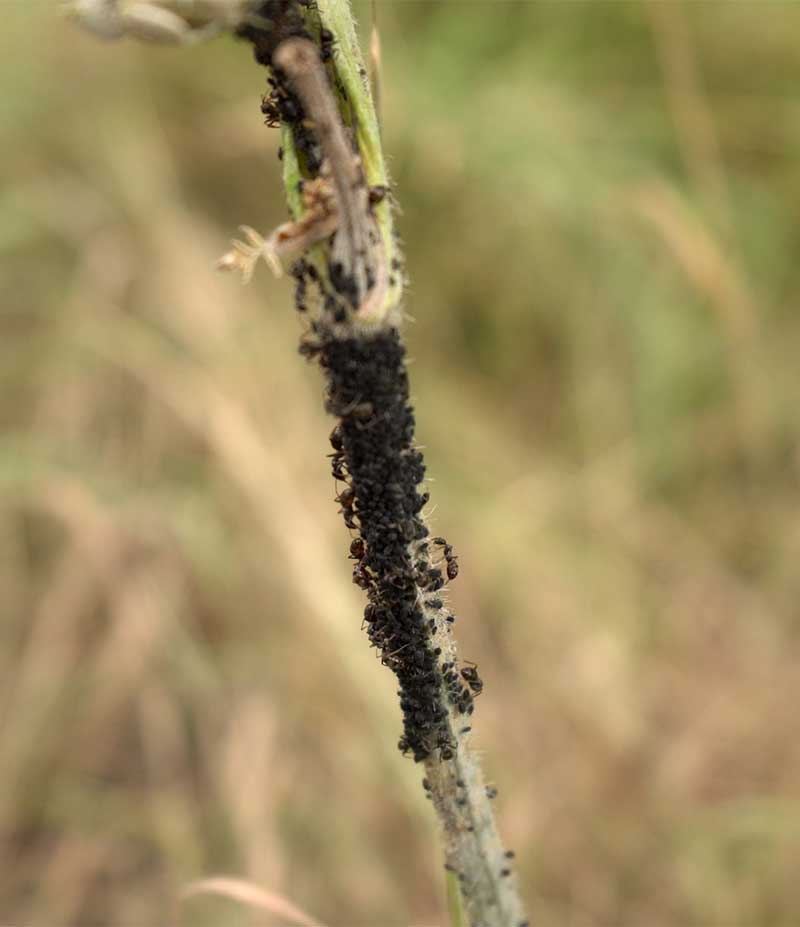
After a prolonged heatwave, much of the woodland vegetation had dried out. Among the weeds growing beside a path, a cluster of tiny black dots stood out against the otherwise lifeless surroundings.
Looking closer revealed a busy community of ants and aphids gathered together on a single stem. Rather than simply sharing the same plant, these insects were actively interacting with one another. The ants carefully moved around the aphids, stopping regularly to touch them with their antennae.
For a macro photographer, scenes like this are ideal. The insects remain relatively stationary, allowing plenty of time to experiment with composition, magnification and lighting without constantly chasing a moving subject.
Why Do Ants Farm Aphids?
The behaviour is an example of mutualism, a relationship where both species benefit. Scientists have studied this partnership extensively, and it is often compared to human farming.
Aphids feed on plant sap, which contains a large amount of sugar. As they process this sap, they produce a sugary liquid called honeydew. Ants are highly attracted to honeydew because it provides a valuable source of carbohydrates.
To encourage the aphids to release honeydew, ants gently stroke or tap them with their antennae. An aphid will then produce a droplet, which the ant collects and consumes.
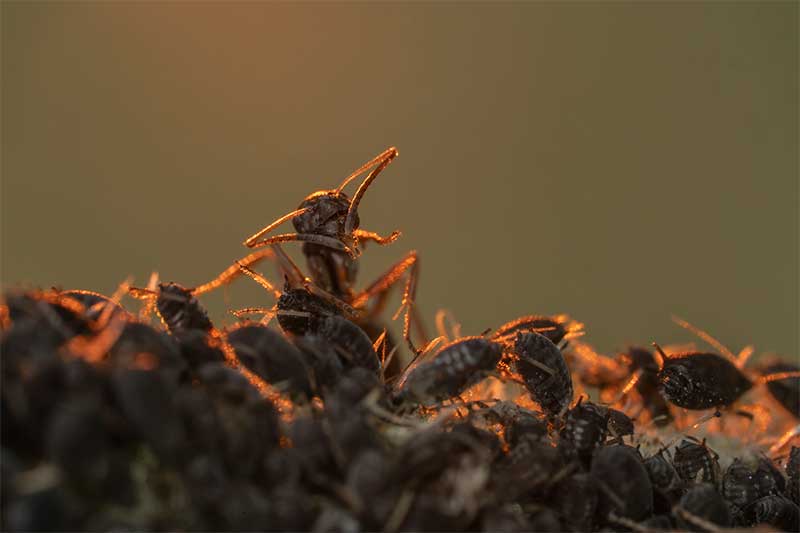
The aphids benefit too. Ants actively defend their “herd” from predators such as ladybirds, lacewing larvae and parasitic wasps. In some species, ants even move aphids to better feeding locations and protect them from harsh environmental conditions. This protection significantly increases the aphids’ chances of survival.
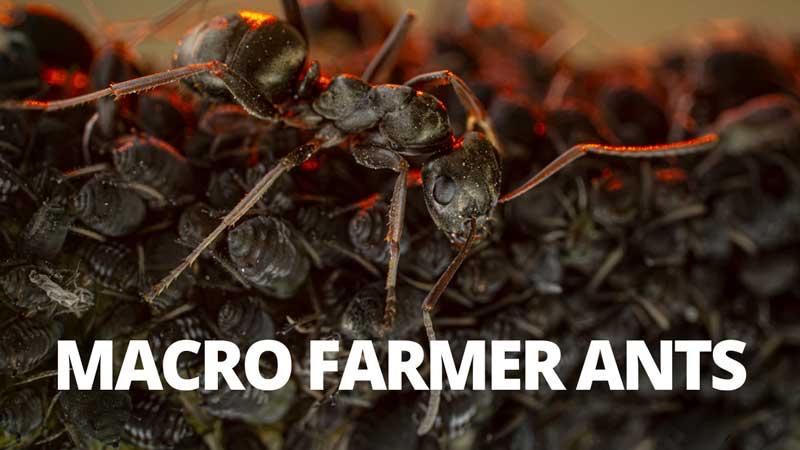
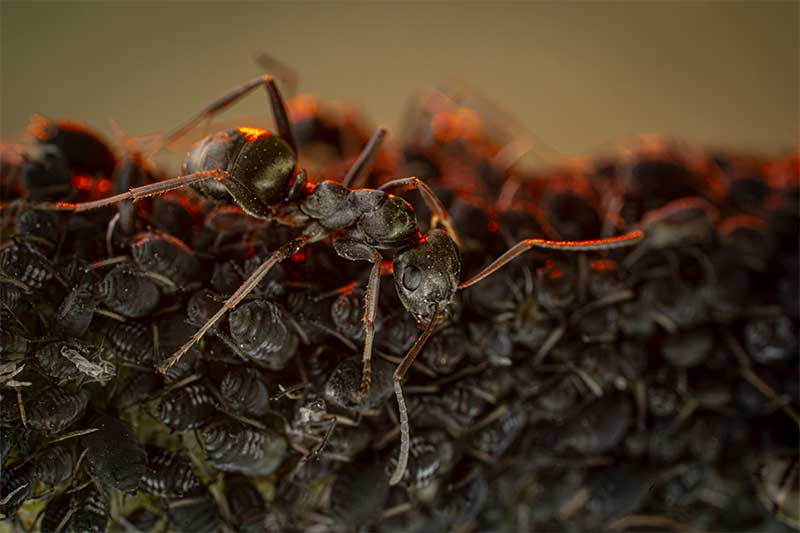
When viewed through a macro lens, the relationship becomes even more impressive. The ants appear enormous compared to the tiny aphids, highlighting just how protective these insects can be over their valuable food source.
Choosing the Right Camera Setup
The vertical stem naturally lends itself to portrait compositions, although landscape crops can work equally well depending on the arrangement of the insects.
At high magnifications, every movement becomes important. The Sony 100mm f2.8 Macro lens with 2x Teleconverter allows the tiny interactions between ants and aphids to fill the frame. This makes it possible to capture details such as antenna movements, honeydew collection and protective behaviour that would otherwise go unnoticed.
Recording slow motion footage can also be particularly effective. Ants often move with delicate, deliberate motions that become much easier to appreciate when slowed down.
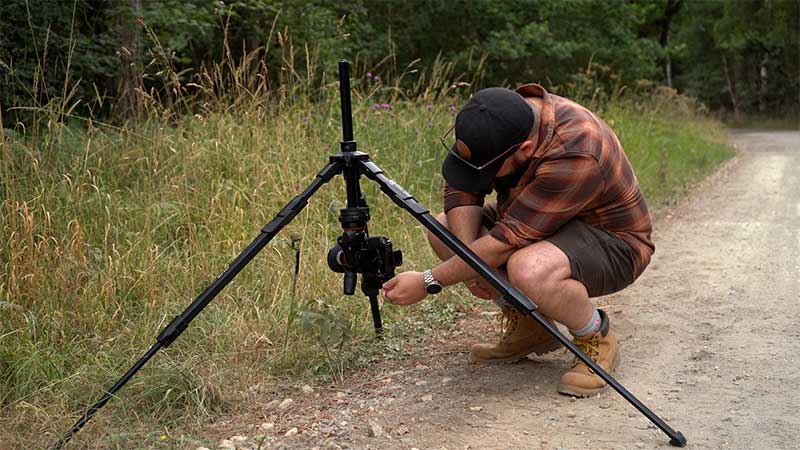
Positioning a camera around delicate plant stems can be challenging, especially when working close to the ground. In situations like this, the Manfrotto ONE Tripod offers a significant advantage thanks to its versatile centre column system, allowing the camera to be mounted underneath the tripod for precise low-level positioning.
This creates a stable setup while providing fine control over framing and camera angle. The under-mounted configuration is particularly useful when photographing insects on vertical stems because it helps place the camera exactly where it needs to be without disturbing the subject.
Lighting Ants and Aphids
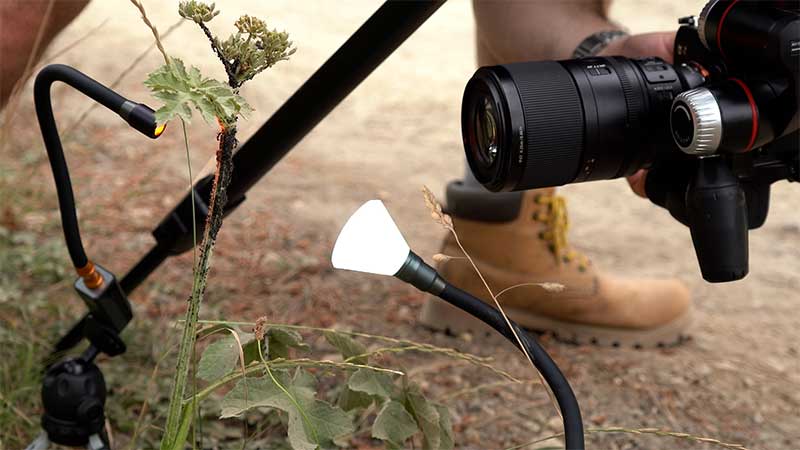
Lighting plays a huge role in revealing detail at high magnification. For this subject, illuminating the scene from multiple directions helps separate the insects from the background while emphasising texture.
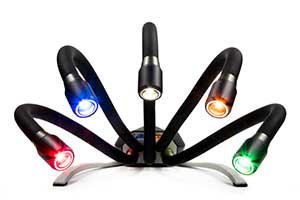
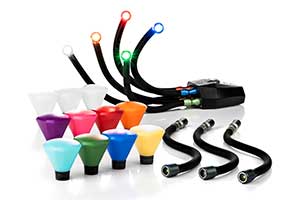
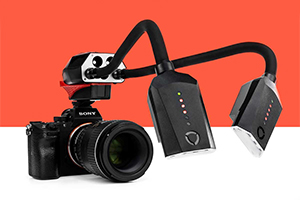
A simple but effective approach is to use a white LED Lighting Arm as the main light and an amber LED Lighting Arm as a secondary light from behind. This combination creates a natural golden-hour appearance while maintaining realistic colours.
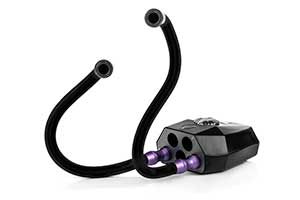
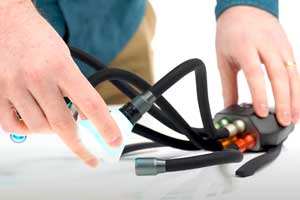
The new Pod Mini 2.0 makes this type of setup easier than ever. The biggest upgrade is the addition of Bluetooth connectivity and full app control. The Pod Mini 2.0 can now connect directly to the Adaptalux App, allowing brightness adjustments without touching the lighting setup.
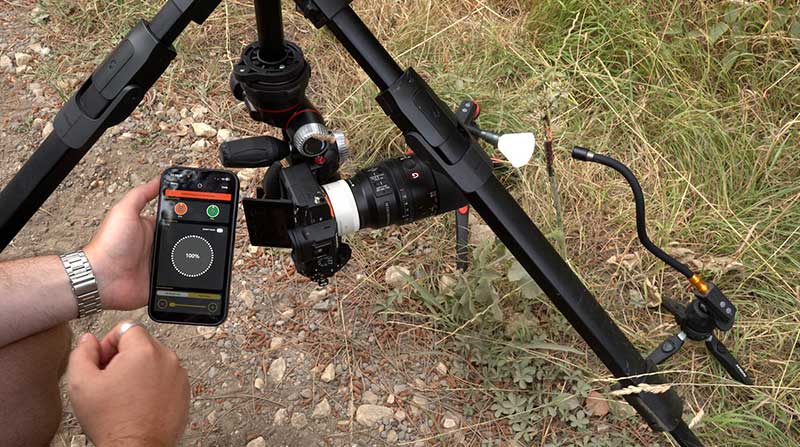
The updated Adaptalux App also supports multi-pod connectivity, meaning multiple Pod Mini 2.0 units can be connected and controlled from a single interface. This makes it possible to place lights on opposite sides of a subject while managing everything remotely from behind the camera.
For subjects like ants and aphids, remote brightness control is especially useful because it allows fine adjustments while observing the live view on the camera. Small changes to the balance between white and amber light can dramatically alter the mood of an image.
Finding Interesting Subjects in Unexpected Places
One of the most valuable lessons in macro photography is to avoid overlooking ordinary subjects.
A dry woodland path may not initially seem promising, particularly when flowers and fungi are scarce. Yet a tiny aphid farm hidden on a roadside weed can provide a more engaging photography opportunity than many larger and more obvious subjects.
Observing behaviour is often more rewarding than simply photographing a static insect. The interaction between ants and aphids tells a story, giving context and interest to every image.
The next time you spot a cluster of insects gathered on a plant stem, take a closer look. You may discover an entire farming operation taking place right beneath your feet.

- Best Flexible LED Lighting for Macro Photography - 1st October 2026
- What’s inside your chocolate bar? – Food Macro with flexible LED Lighting - 27th September 2026
- Adaptalux Macro Lighting System vs Ring Lights for Macro Photography - 18th September 2026


