











When photographers first start exploring macro photography, one of the first lighting choices they encounter is the macro ring light. Ring lights are affordable, widely available, simple to use and capable of producing bright, even illumination around a subject. For many beginners, that makes them an obvious starting point.
However, as photographers develop their skills, they often discover that macro photography is not simply about adding more light. It is about controlling exactly where light falls, where shadows appear, how textures are revealed and how depth is created within an image.
This is where dedicated macro lighting systems such as Adaptalux take a fundamentally different approach.
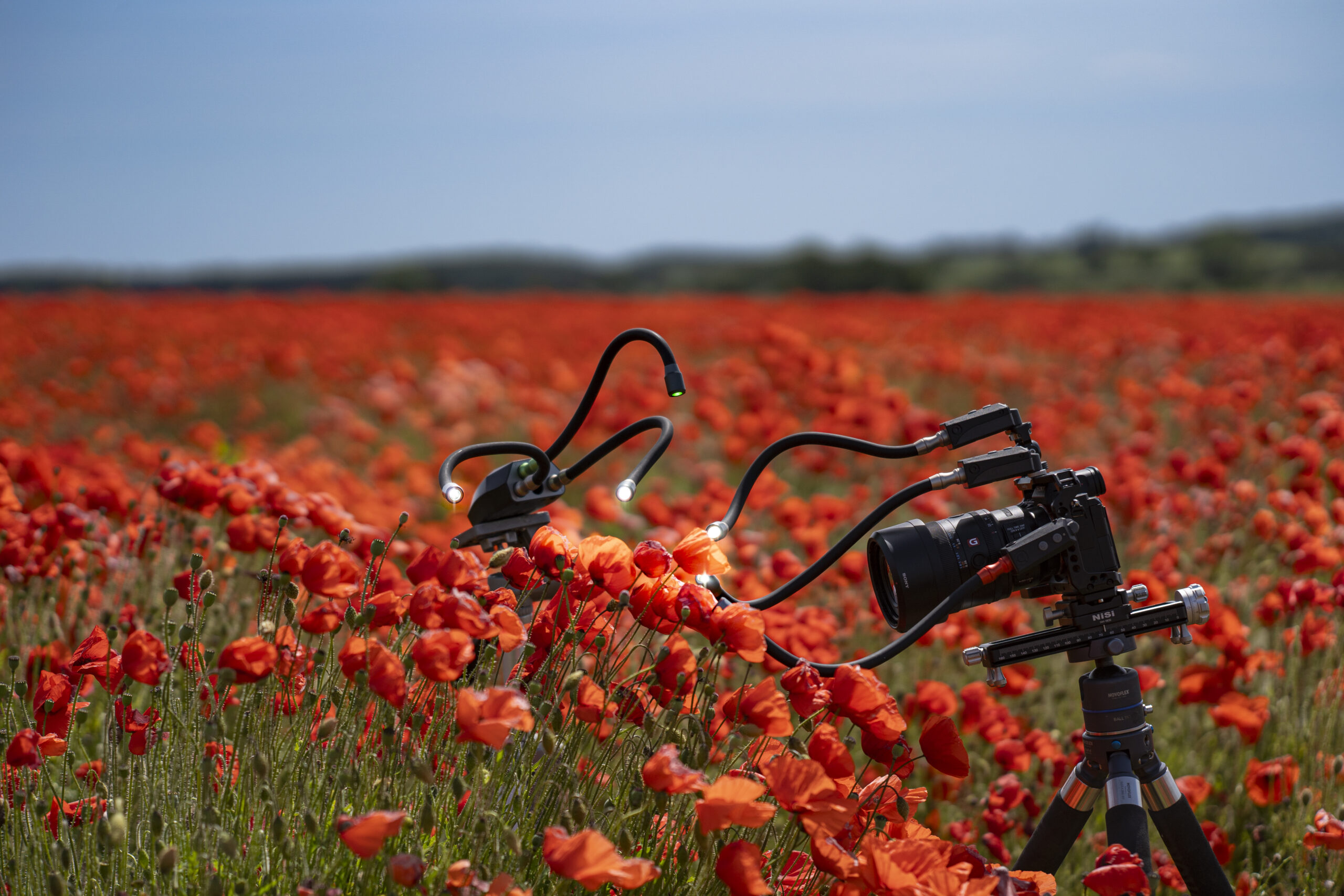
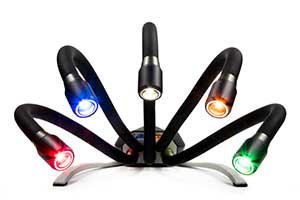
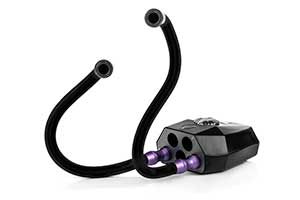
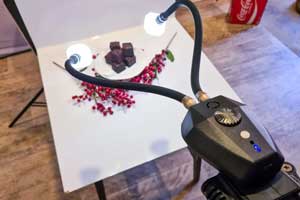
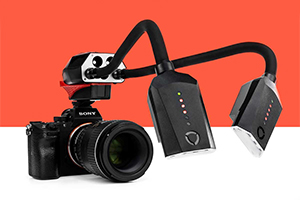
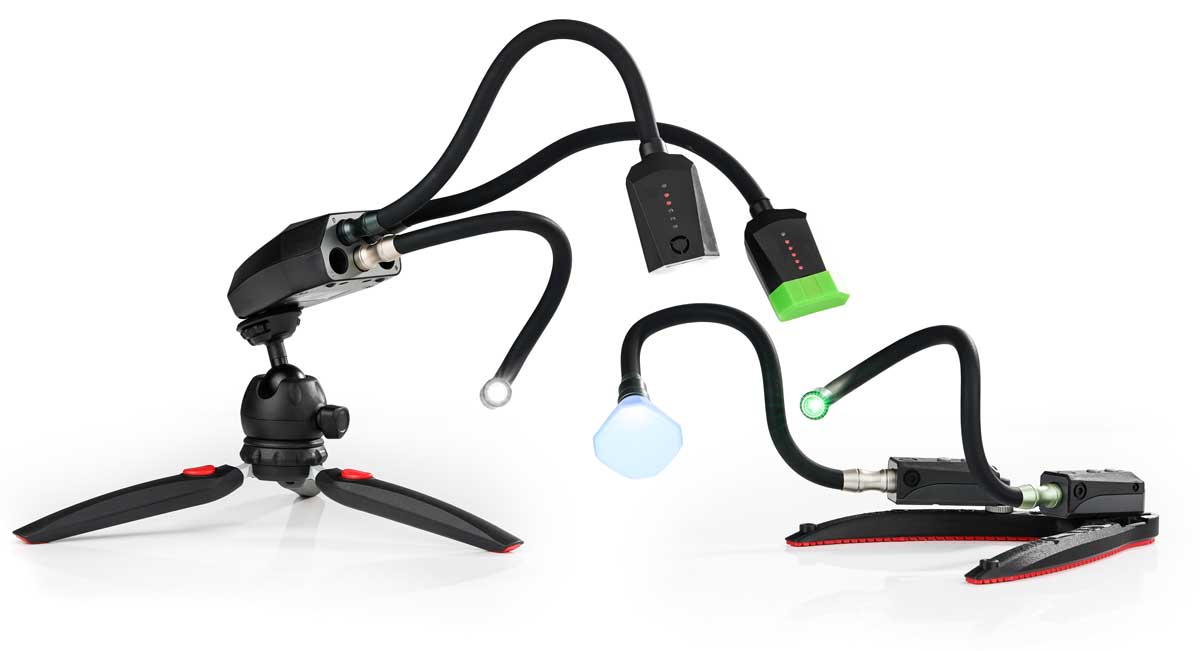
Rather than mounting a fixed ring of LEDs around the front of a lens, the Adaptalux Macro System uses small independently-positionable Lighting Arms that can be placed precisely around a subject. Each light can be adjusted individually, modified, diffused and repositioned to create almost any lighting effect imaginable.
Both approaches have advantages, and both are capable of producing excellent macro photographs. The real question is: which lighting approach gives photographers the greatest creative control over their images?
In this article we compare a traditional macro ring light with the Adaptalux Macro Lighting System side by side across a range of real-world macro photography scenarios. The images in this article were taken side by side using a generic LED ring light and an equivalent 2 light Adaptalux setup.
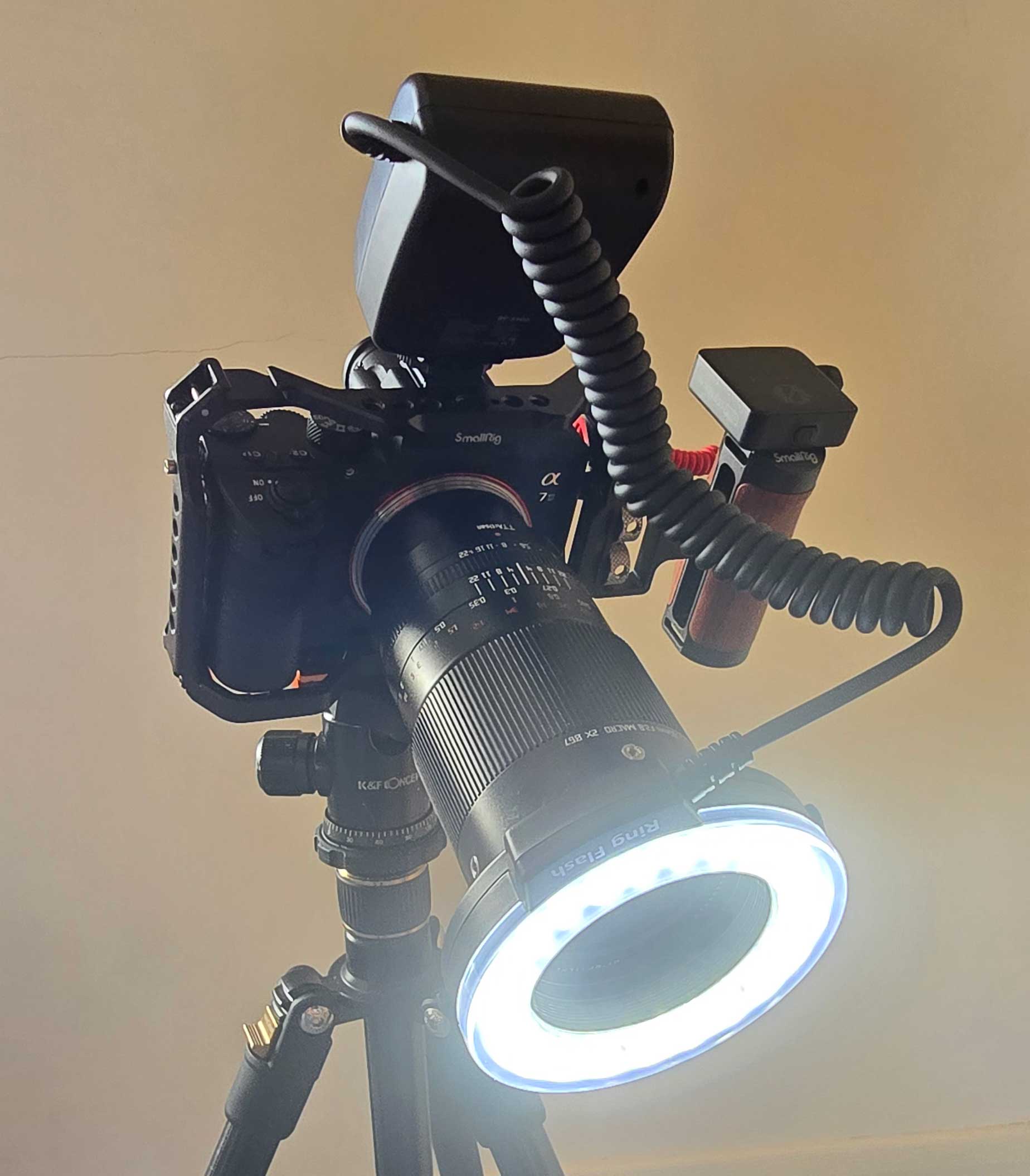
What is a macro ring light?
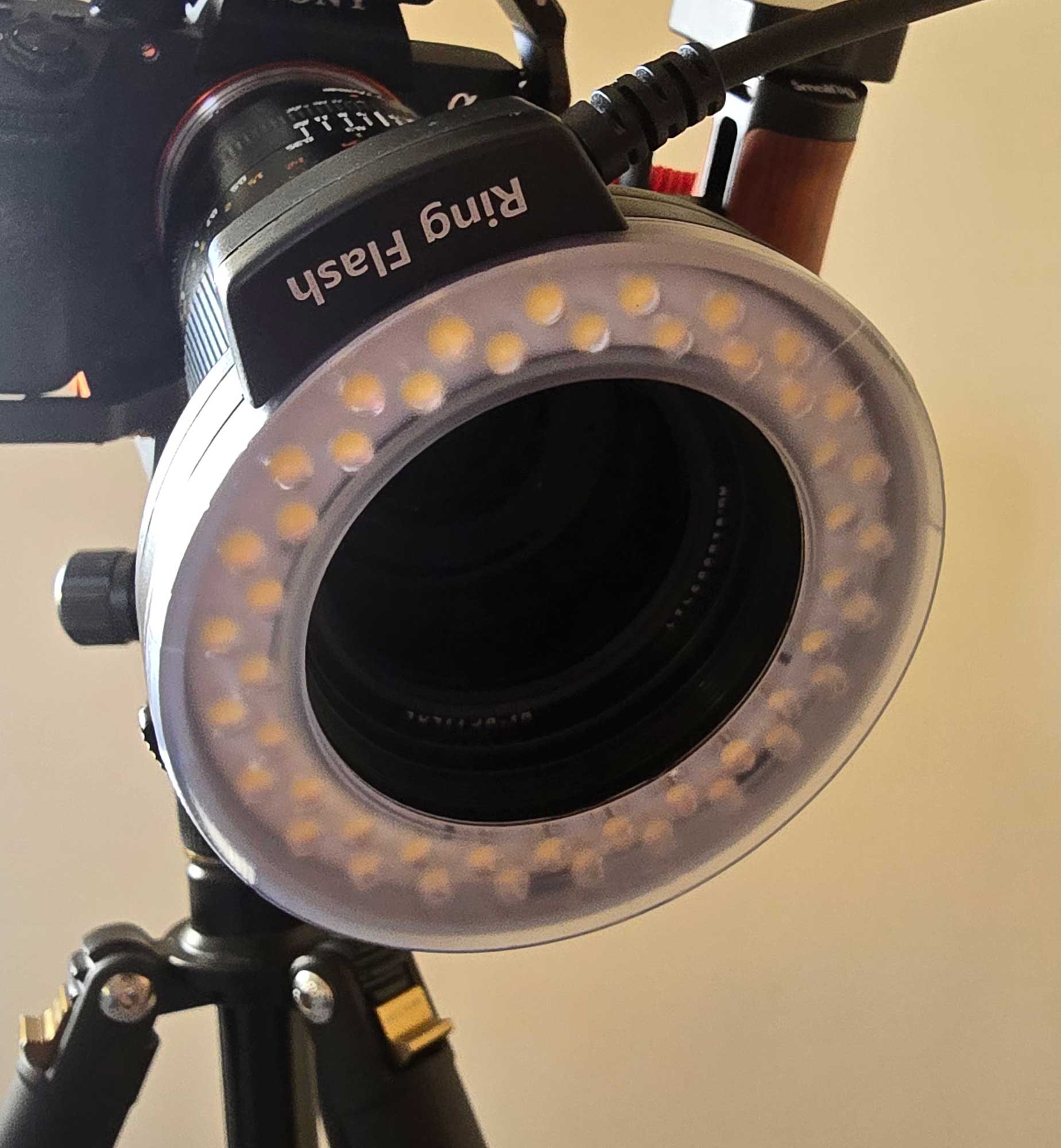
A macro ring light is a circular light source mounted around the front of a camera lens. Because the light surrounds the optical axis of the lens, illumination is projected directly onto the subject from the camera’s point of view.
This creates several advantages:
- Simple setup
- Even illumination
- Minimal shadowing
- Good results for documentation and identification work
- Affordable entry point into macro lighting
However, the same characteristics that make ring lights easy to use can also limit their creative potential. Because the light always comes from roughly the same location as the camera, it can be difficult to create depth, direction and texture.
What makes Adaptalux different?
Unlike a ring light, Adaptalux is a modular macro lighting system built specifically around directional lighting control for macro photography.
Rather than forcing every light source around the front of the lens, Adaptalux allows photographers to position multiple Lighting Arms exactly where they are needed.
A light can be placed above the subject, behind it, underneath it, beside it or at any angle in between. This seemingly simple difference completely changes how light behaves in a macro scene.
Instead of illuminating everything equally, photographers can add contrast, reveal textures, create separation from the background and guide the viewer’s eye through an image.
For creative macro photography, lighting control is often more important than raw brightness.


Shadow Control and Image Depth
One of the biggest differences between ring lights and Adaptalux is how shadows are handled.
Ring lights are designed to minimise shadows. For scientific recording, specimen photography and simple documentation this can be beneficial. The subject is evenly illuminated and details remain visible.
The downside is that eliminating shadows also removes many visual cues that create depth and dimension.
Adaptalux allows photographers to intentionally control shadows rather than eliminate them. A strategically positioned Lighting Arm can emphasise the texture of an insect’s exoskeleton, reveal the details in a mushroom cap or highlight subtle structures within flower petals. The result is often a much more three-dimensional image which is especially important when creating eye-catching images.
In the test images above, you can clearly see the surface texture and shadow of the seashell is much more visually pleasing with the shadow and depth in-tact.
Lighting Very Small Subjects
As magnification increases, available working space becomes increasingly limited.
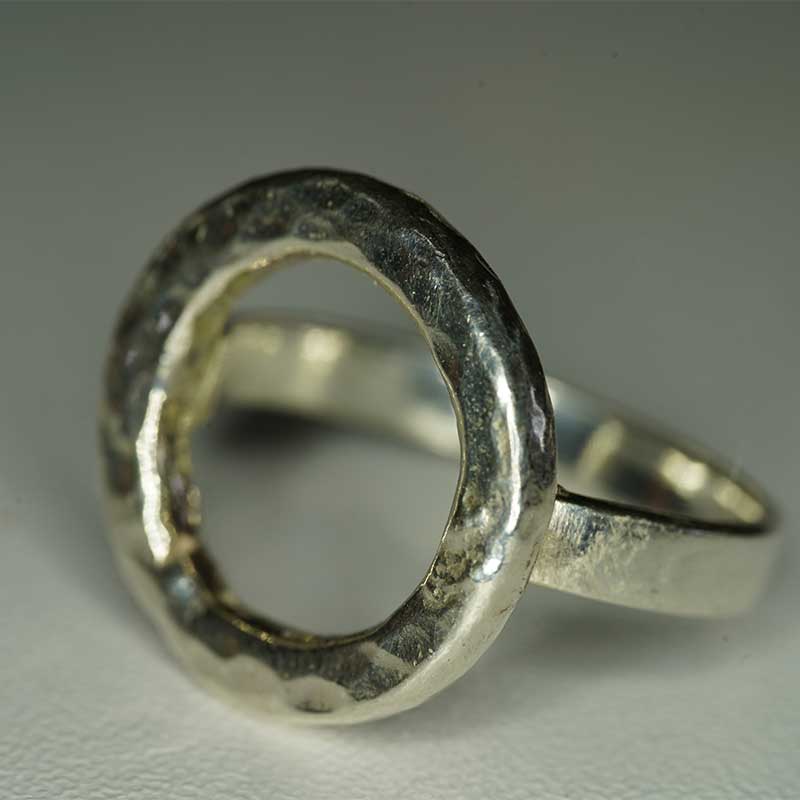
Ring lights must remain attached to the front of the lens, potentially positioning the light source relatively far away from tiny subjects, and occasionally too close too.
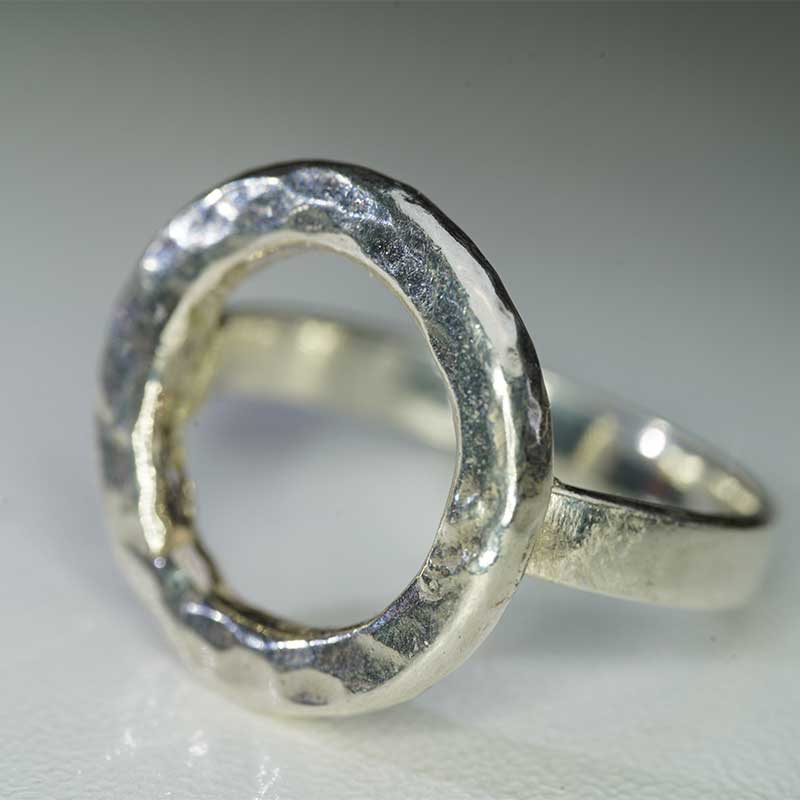
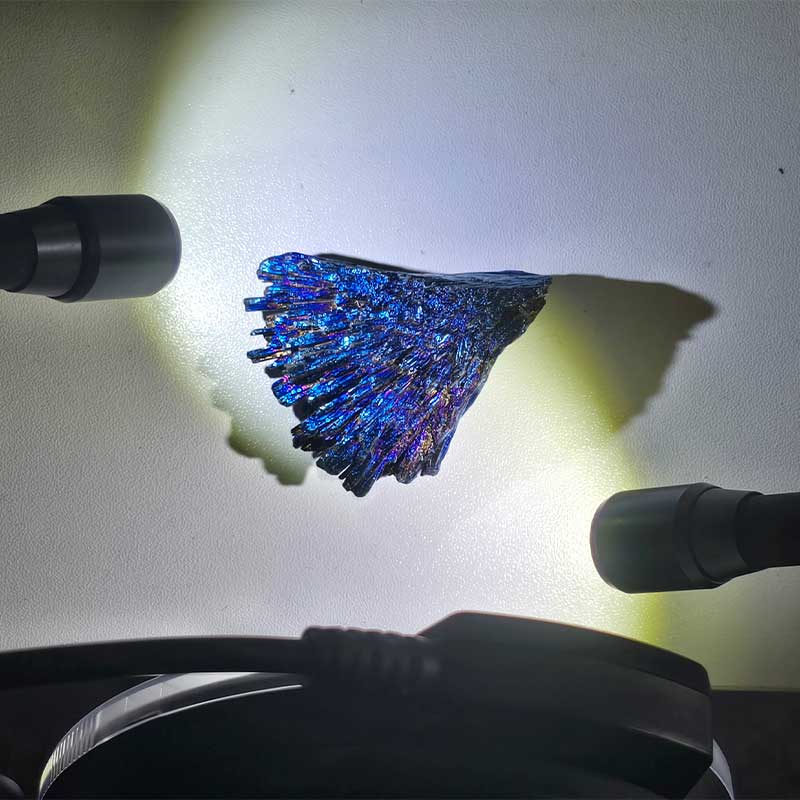
The Adaptalux Lighting Arm head measures just 14mm, allowing it to fit into spaces that would be inaccessible to larger lighting solutions and the flexible arms allow for positioning the lights as close as a few millimeters from the subject.
This enables photographers to bring light closer to the subject, often increasing effective brightness while simultaneously improving lighting precision. For extreme macro photography, scale matters and the tiny working distances will prove frustrating with a ring light setup.
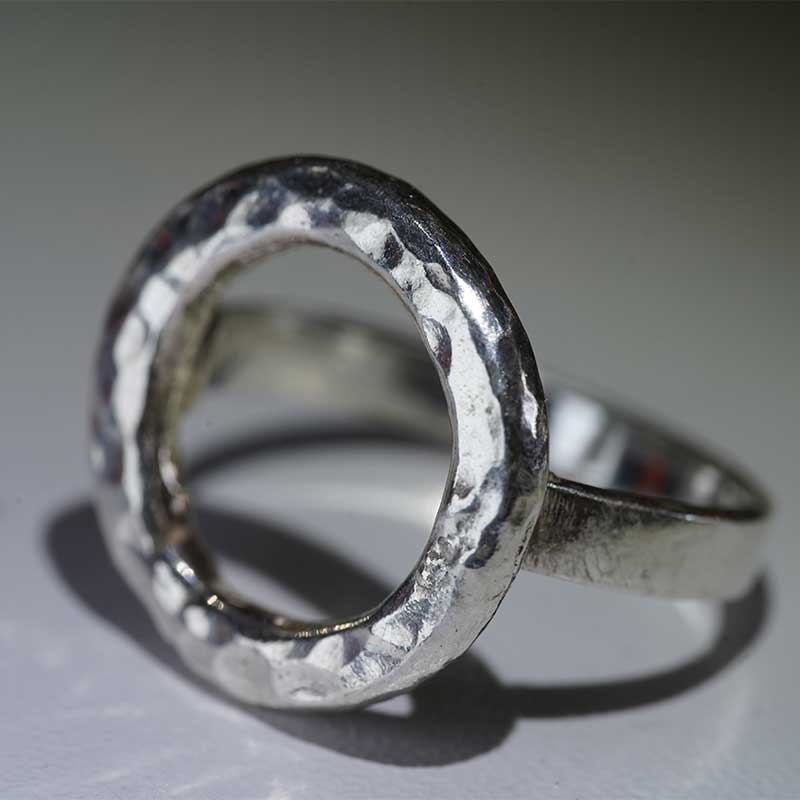
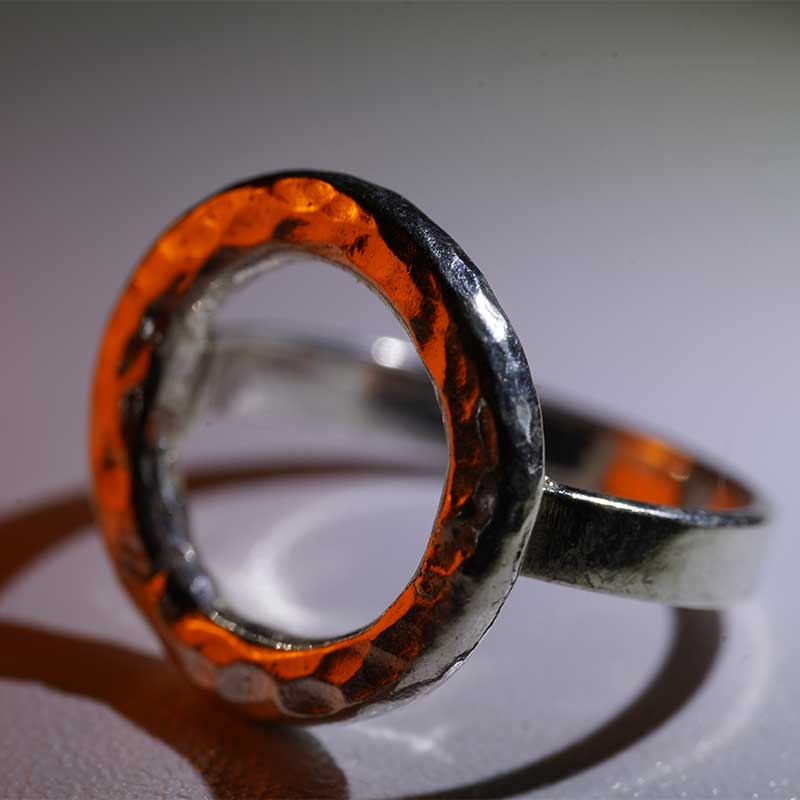
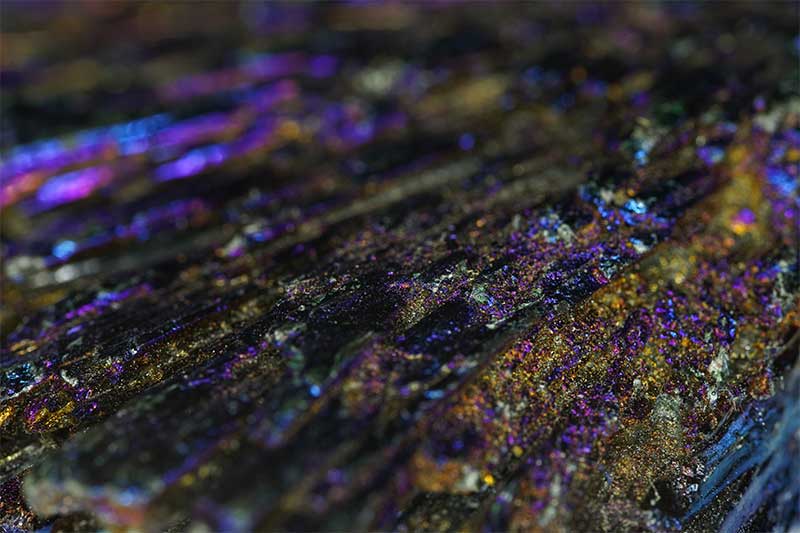
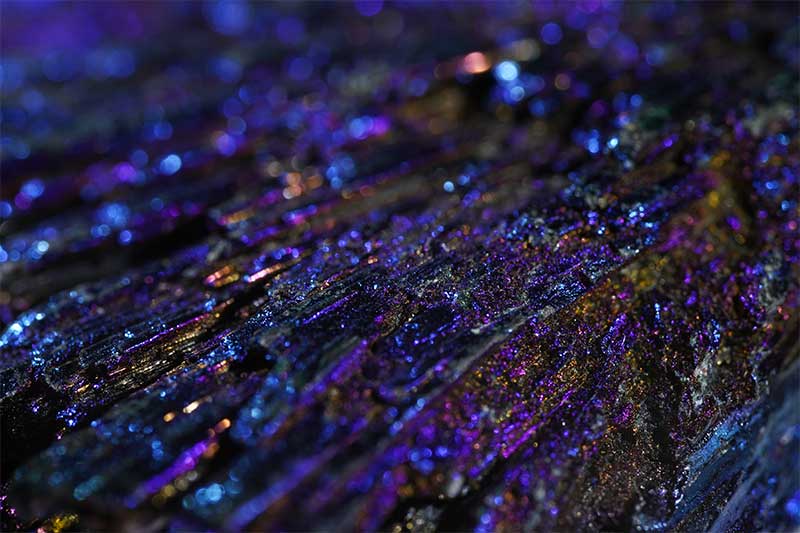
In the example above, there is only one possible position for the ring light, and the small reflective ring is not reflecting the light properly. The flexible positions of Adaptalux Lighting Arms allow for infinite possibilities and creative options as seen in the example images below.
Creative Lighting Possibilities
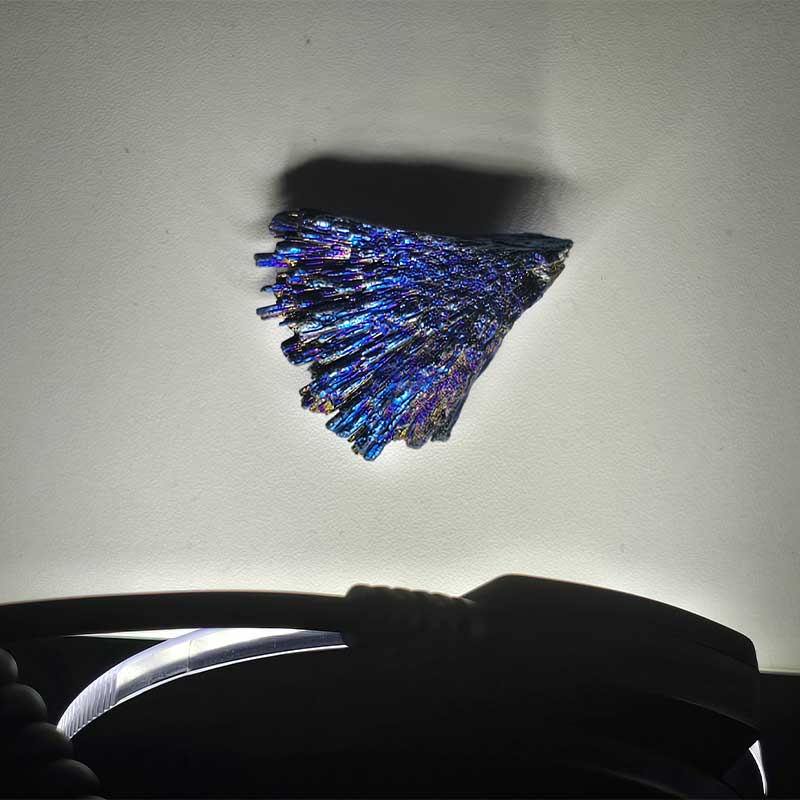
Most ring lights provide a fairly consistent lighting pattern because the position of the LEDs is fixed around the lens. Adaptalux allows completely different lighting styles.
Photographers can create:
- Side lighting
- Backlighting
- Rim lighting
- Cross lighting
- Coloured accent lighting
- Multi-light studio-style setups
This makes Adaptalux particularly attractive for creative photographers looking to develop a distinctive visual style.
Ease of Use
In this area, ring lights retain a clear advantage – they don’t require much lighting knowledge to get an acceptable image.
Most ring lights simply mount to the lens and begin working immediately. There are few settings to learn and very little setup required.
Adaptalux is still straightforward to use, but it offers significantly more control and therefore requires slightly more involvement from the photographer.
For somebody wanting a simple lighting solution with minimal setup, a ring light remains highly attractive.
Long-Term Growth
A ring light is generally a standalone product that suits a single style of photo.
Adaptalux is a whole lighting system designed to be customised for any kind of macro pursuit.
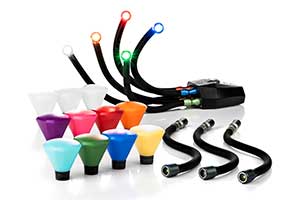
Photographers can begin with a simple one-light setup and later add additional Lighting Arms, coloured lighting, UV lighting, flash capability, diffusers and wireless control without replacing their existing equipment. As your photographic ambitions expand, the lighting system can expand as well.
For hobbyists who anticipate growing their skills over time, this flexibility represents one of Adaptalux’s biggest advantages and provides the opportunity to experiment and learn about light rather than relying on a single direction of light attached to the camera.
Ring Light vs Adaptalux: Which Should You Choose?
Choose a Ring Light if:
- You need a lowest cost entry into generic lighting.
- You primarily photograph for documentation or identification.
- You need generic but consistent light from a single direction.
- You value speed and simplicity above lighting control.
- You want an all-in-one solution attached directly to the camera.
Choose Adaptalux if:
- You want maximum control over your lighting.
- You photograph insects, flowers, fungi, miniatures or products.
- You want shadow, contrast and.or colour in your images.
- You want repeatable professional-looking results.
- You expect your macro photography to become more advanced over time.

- Best Flexible LED Lighting for Macro Photography - 1st October 2026
- What’s inside your chocolate bar? – Food Macro with flexible LED Lighting - 27th September 2026
- Adaptalux Macro Lighting System vs Ring Lights for Macro Photography - 18th September 2026


