











How to Photograph Colourful Mushrooms – Use Light to Enhance Natural Contrast – Watch on YouTube
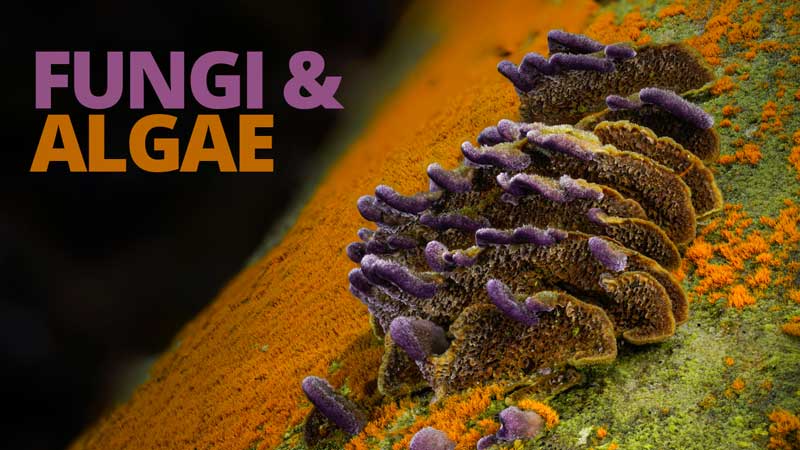
One of the easiest ways to create eye catching mushroom photographs is to look for natural colour contrast. Woodland fungi often blend into their surroundings, but occasionally you find a scene where complementary colours work together to create something special.
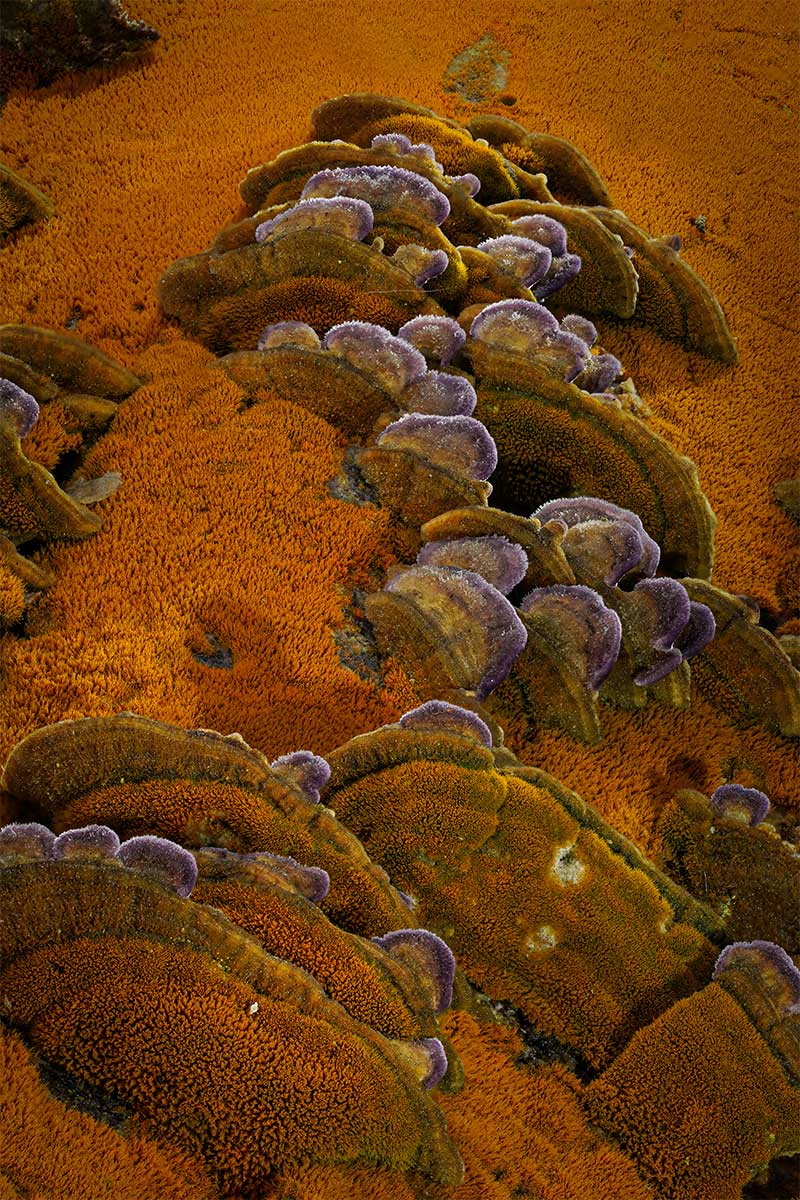
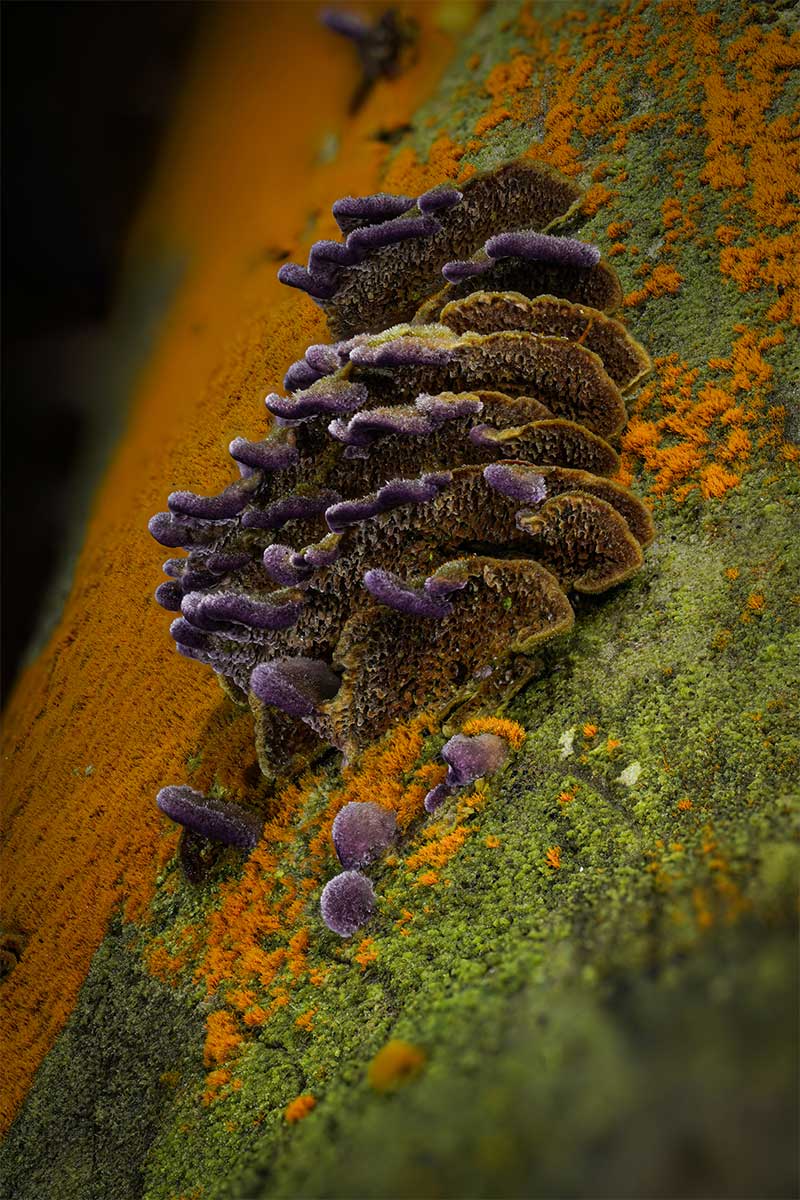
A fallen log covered in bright orange algae and dotted with purple pore bracket fungus is a perfect example. The strong contrast between orange and purple immediately draws the eye and creates a photograph with far more impact than colour alone could achieve.
In this Article
- Finding Natural Colour Contrast in Woodland Fungi
- Choosing the Best Camera Angle for the Scene
- Using Macro Lighting to Enhance Colour
- Focus Stacking Mushrooms in Changing Conditions
- Creating Sharp, Vibrant Woodland Macro Photographs
Equipment Used.
Camera
- Sony A7III
- Sony 100mm f/2.8 Macro
- Manfrotto One Tripod
Lighting
Start by Looking for Colour Contrast
When photographing fungi, shape and texture are important, but colour can completely transform an image.
Bright orange algae can create a striking backdrop for fungi that carry hints of purple. In woodland environments, these combinations can be surprisingly rare, which makes them worth taking the time to photograph carefully.
Before setting up any equipment, spend a few minutes studying the scene. Consider how the colours interact and think about the final composition. A slight change in camera angle can dramatically alter how much of each colour appears in the frame.
In this situation, a steep shooting angle works particularly well. Looking down across the log allows more of the orange algae to remain visible while still showcasing the fungi.
Position the Camera for the Best Composition
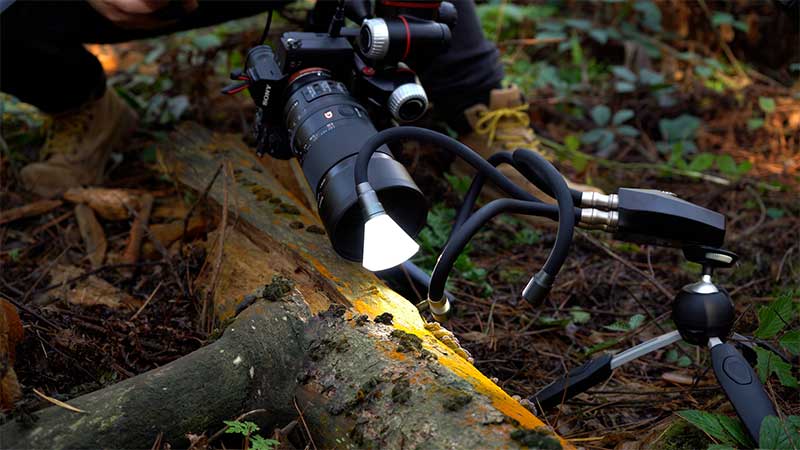
Once you’ve found an interesting subject, stability becomes essential. A tripod helps you fine tune the composition and is especially important if focus stacking will be required later. By underslinging the camera beneath the tripod, it is often possible to achieve a lower shooting position while maintaining full stability.
When composing a scene like this, there is a balance to strike between depth and detail. A deeper composition may show more of the log and surrounding environment, but it will also require a much larger focus stack. If you are focusing manually through the scene, this can quickly become time consuming.
Choosing a slightly steeper angle helps reduce the depth of the subject while still preserving the most important visual elements.
Use Lighting to Enhance the Colours
Natural colours often look good on their own, but carefully placed lighting can make them far more vibrant.
When conditions are overcast with occasional bursts of sunlight, relying solely on ambient light can lead to inconsistent results. Adding controlled LED lighting makes it easier to balance exposure and maintain a consistent look throughout the image.
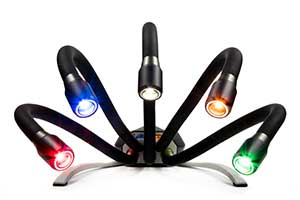
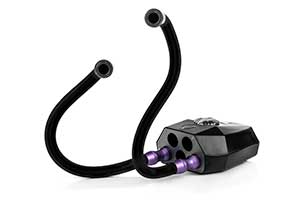
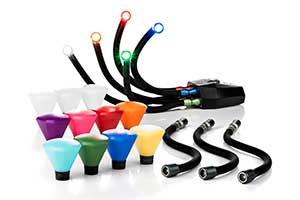
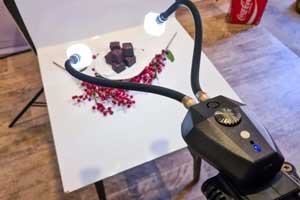
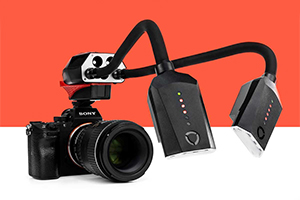
A flexible lighting system such as the Adaptalux Macro Lighting System allows individual areas of the scene to be illuminated independently.
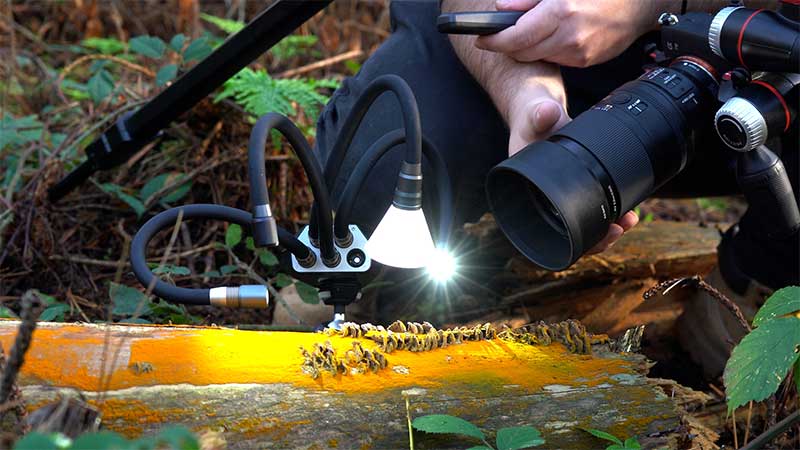
For a mushroom scene with strong colour contrast, a four light setup works particularly well:
Create a Soft Main Light
The primary light should provide overall illumination for the scene.
Using a white lighting arm fitted with a diffuser creates soft, natural looking light that reveals detail without harsh shadows. Placing this light above the fungi allows it to act as a key light, forming the foundation for the entire setup.
Brighten the Foreground
A second white light can be used at a lower brightness to illuminate the foreground.
This helps reveal texture in the algae and gives the image a greater sense of depth without overpowering the subject.
Add Separation from Behind
Backlighting is particularly useful when photographing fungi. A carefully positioned lighting arm placed behind the mushrooms can catch the edges and tips of the fruiting bodies. This subtle rim light helps separate the fungi from the background and emphasises their structure.
Illuminate the Background Colour
The final light can be dedicated entirely to the background. By directing a light specifically onto the orange algae, it becomes possible to strengthen the visual contrast between the algae and the purple fungi. Rather than increasing saturation during editing, this approach enhances the colour naturally at the point of capture.
Adjust Lighting in Real Time
One of the biggest advantages of the Adaptalux System and continuous LED lighting is the ability to see the results immediately. Rather than taking a photograph and reviewing it afterwards, adjustments can be made while watching the effect on the camera screen.
Small brightness changes often have a significant impact during macro photography. Fine control allows each light to contribute exactly the amount needed.
In some cases, a light may only need to be set to a few percent brightness. A subtle highlight across the top of a mushroom can provide all the separation necessary without producing distracting hotspots.
This level of precision is one of the reasons macro photographers increasingly favour Adaptalux Lighitng for woodland subjects.
Focus Stacking Colourful Mushrooms
Even with careful composition, fungi often have more depth than can be captured sharply in a single frame. Focus stacking allows multiple images focused at different distances to be combined into one photograph with extended depth of field.
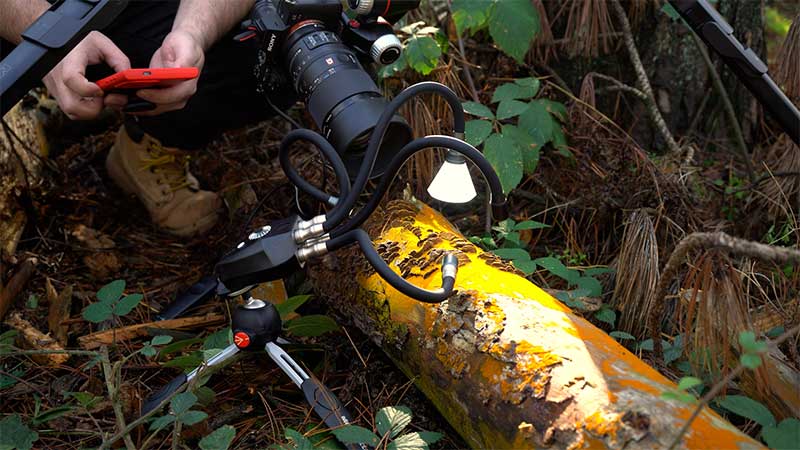
A focusing rail is commonly used for this process, but it is not always practical when photographing larger subjects such as sections of fallen logs. In these situations, manually adjusting lens focus between exposures can be an effective alternative.
A remote shutter release helps minimise camera movement, but great care must still be taken when adjusting focus. Even small nudges can introduce alignment problems that complicate the stacking process later.
When focus stacking outdoors, changing ambient light can cause serious problems. Moving clouds may cause brightness levels to fluctuate throughout the stack. If the exposure changes significantly between frames, stacking software can struggle to blend the images cleanly.
This is another reason why supplemental lighting is so valuable. By allowing the Adaptalux lighting to provide the majority of the illumination, the scene becomes far less dependent on the changing natural light around it. Whenever possible, wait for stable cloud cover before beginning a stack. Consistent lighting conditions will improve the chances of achieving a clean final image.
Bringing Everything Together
The best mushroom photographs often combine several elements at once.
Strong composition guides the viewer through the frame. Natural colour contrast creates immediate visual interest. Carefully placed lighting reveals texture, depth and detail. Focus stacking ensures the entire subject remains sharp.
When bright orange algae and purple fungi appear together, the scene already offers remarkable colour. By using lighting strategically and maintaining careful control over exposure, those colours can be presented at their absolute best.
If you are learning how to photograph colourful mushrooms, look beyond the fungi themselves. Pay attention to the surrounding textures, colours and backgrounds. With thoughtful composition and precise lighting, even a small patch of woodland can produce striking macro photographs filled with colour and detail.

- How to Photograph Colourful Mushrooms – Use Light to Enhance Natural Contrast - 15th November 2026
- How to Photograph a Fairytale Mushroom with LED Lighting - 25th October 2026
- Best Flexible LED Lighting for Macro Photography - 1st October 2026


