













Ammonite Fossil Macro Photography Tutorial – Watch on YouTube
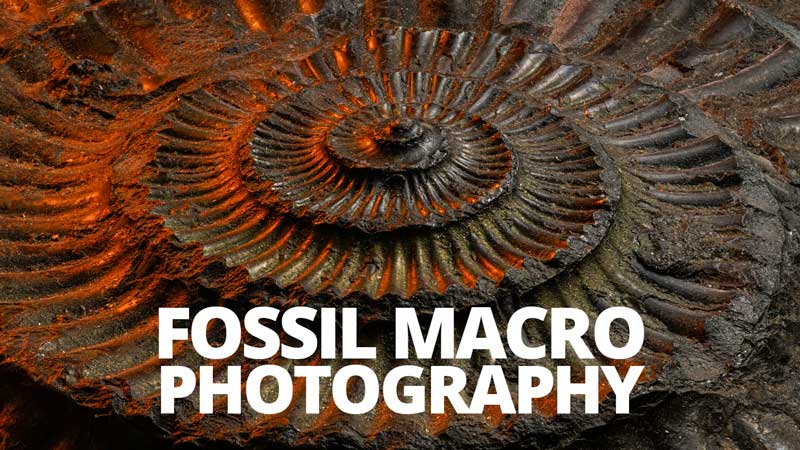
Ammonite fossil macro photography is a powerful way to explore detail that the eye cannot easily see. These ancient fossils hold millions of years of history, yet with the right lighting and technique, they can stand out as a beutiful connection to the past.
This guide explains how to photograph an ammonite fossil using controlled macro lighting. It follows a simple process, focusing on detail, texture, and creative lighting to produce striking results.
What is an ammonite fossil?
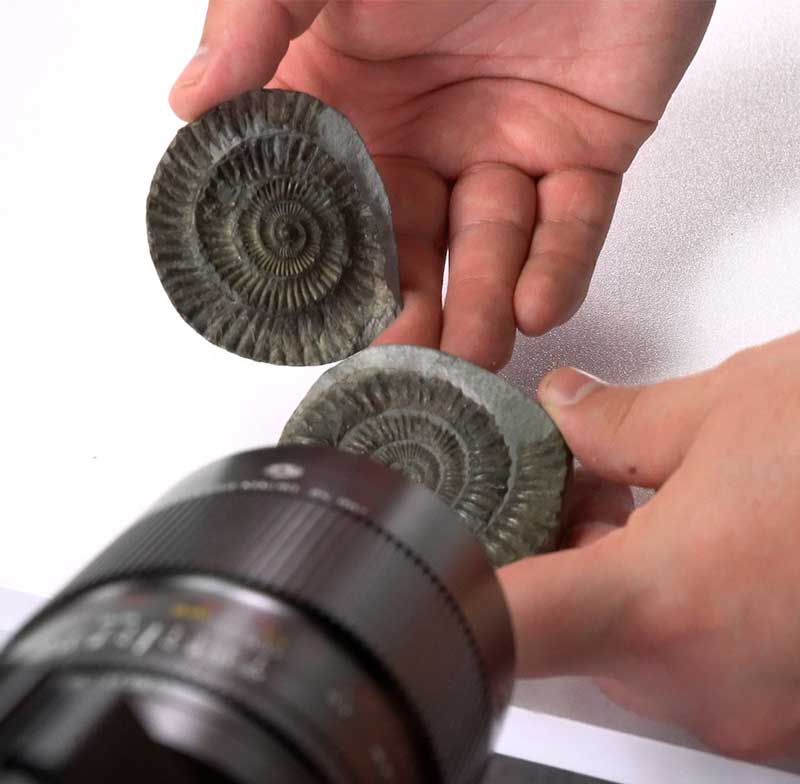
Ammonites were marine creatures that lived over 180 million years ago. They were a type of cephalopod, related to modern squid and octopus. Their shells were divided into chambers, which helped them control buoyancy in the water.
When these animals died, their shells were buried and fossilised in rock. Over time, minerals replaced the original material, leaving behind the detailed spiral structures we see today.
Many ammonite fossils are split open, revealing both sides of the spiral. This makes them ideal for ammonite fossil macro photography, as each surface offers a different visual effect.
Why ammonite fossils work for macro photography
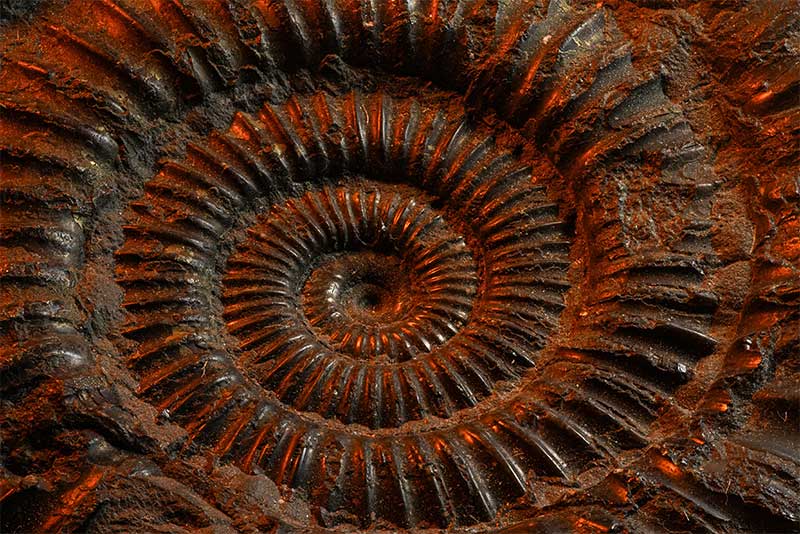
The natural spiral draws the viewer into the image. The repeating ridges create texture, while the subtle surface variations respond strongly to light.
In ammonite fossil macro photography, the subject often appears quite dull under normal lighting. There is usually limited colour, and much of the detail is hidden.
This is where macro lighting becomes important. The right setup transforms the fossil, revealing depth and contrast.
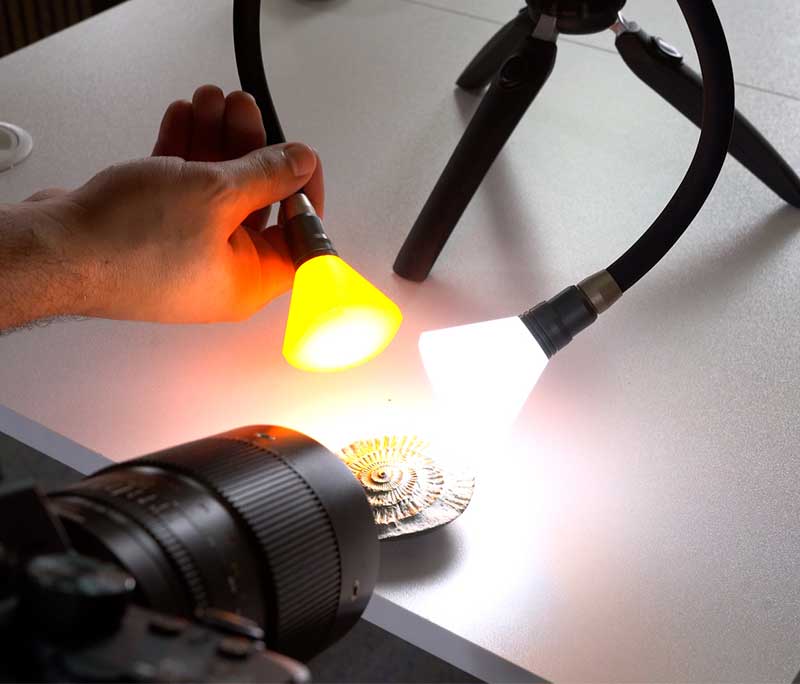
Camera setup
A macro lens is essential. A lens with higher magnification gives flexibility, allowing both close detail and wider shots of the fossil.
A tripod provides stability. At high magnification, even the smallest movement affects sharpness.
A focus stacking rail helps capture multiple images at different focus points. These images can then be combined to create one fully sharp result.
This technique is key in ammonite fossil macro photography, as the spiral structure creates varying depths across the subject.
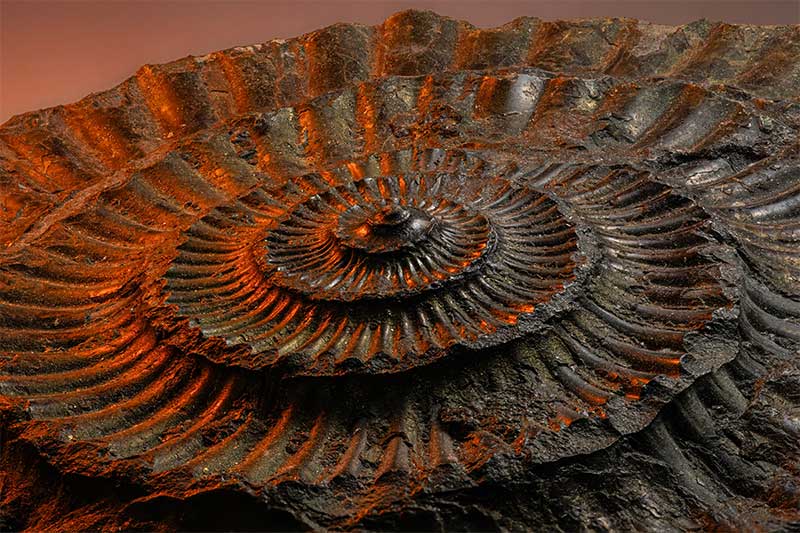
Lighting for ammonite fossil macro photography
Lighting is the most important part of the journey.
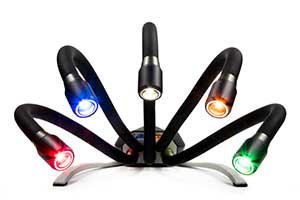
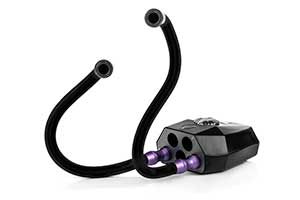
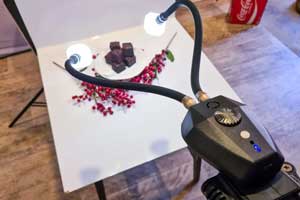
Under ambient light, fossils often appear flat. The texture is present, but it is not emphasised. Using a dedicated macro lighting system like Adaptalux gives full control. The flexible arms make it easy to position light exactly where it is needed.
Place the lighting behind the fossil rather than directly in front. This creates shadows that fall towards the camera, revealing surface detail and adding depth. Front lighting tends to flatten the image and reduce contrast.
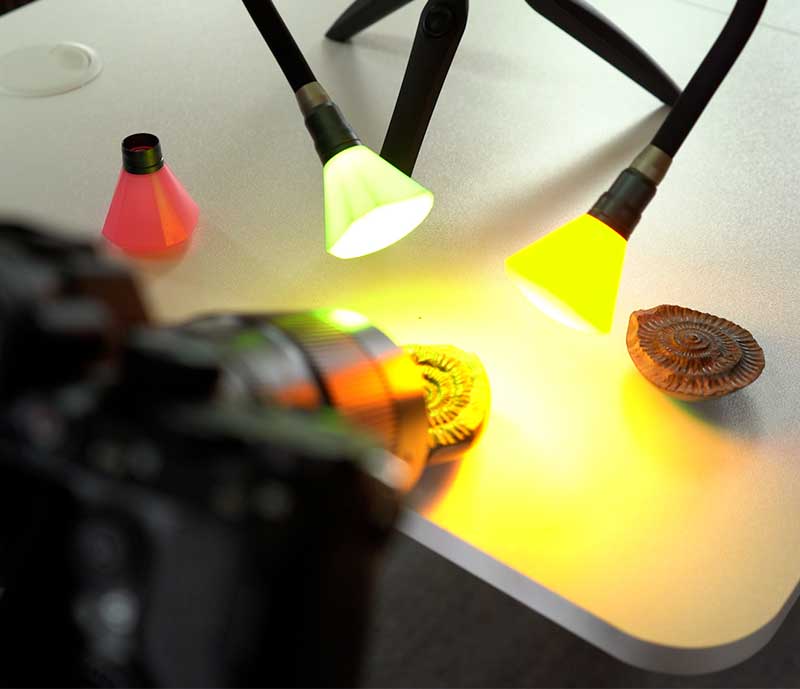
Adding colour for creative ammonite images
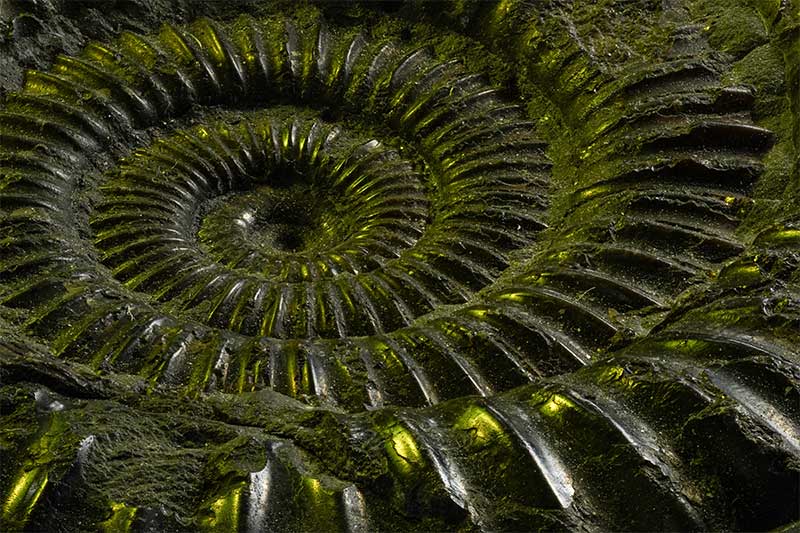
Colour can completely change the feel of an image. In fossil macro photography, the subject itself usually has limited colour. Adding coloured light introduces visual interest.
A subtle orange tone can warm the image and highlight the ridges. Green lighting can create a more dramatic and atmospheric look.
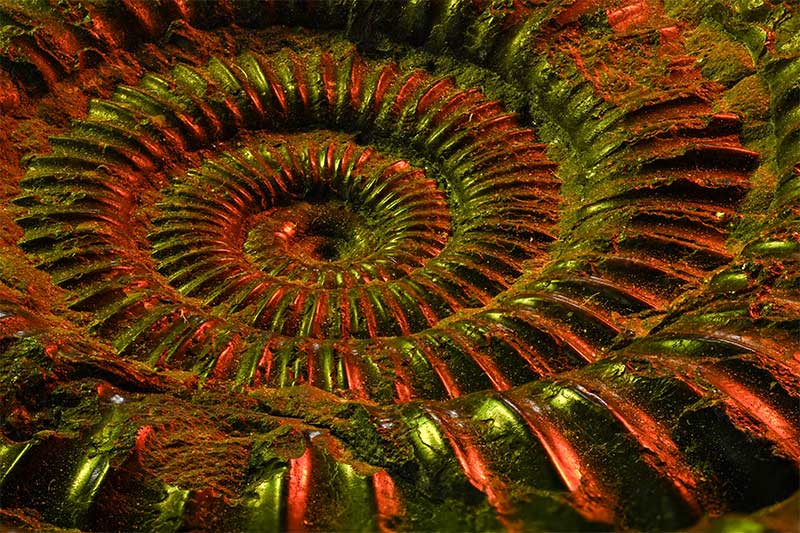
Adding colour for creative ammonite images
Colour can completely change the feel of an image. In fossil macro photography, the subject itself usually has limited colour. Adding coloured light introduces visual interest.
A subtle orange tone can warm the image and highlight the ridges. Green lighting can create a more dramatic and atmospheric look.
Focus stacking for maximum detail
Focus stacking is essential for ammonite fossil macro photography. Take multiple images, each focused on a different part of the fossil. Combine them in post processing to create a fully sharp image.
This technique reveals fine detail throughout the spiral. It turns a simple subject into something far more visually engaging.
Natural versus creative results
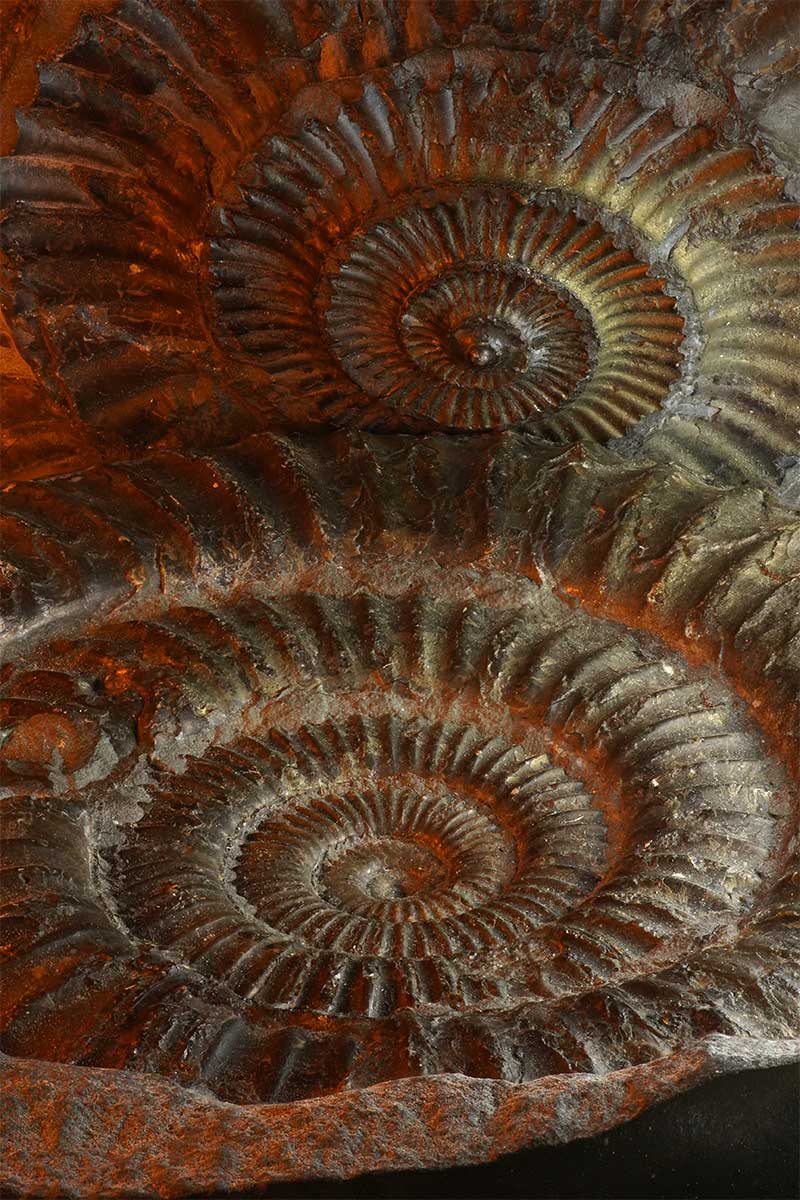
There are two directions to explore. A natural approach focuses on accuracy. The lighting remains neutral, and the fossil appears as it does in real life. This is the way scientists would document the finds and the detail as it looks in real life.
A creative approach uses colour and contrast to produce a more stylised image. This can make the fossil feel more dynamic and eye catching. If your focus is artistic like ours, its sometimes worth sacrificing detail for the right look.
Both approaches work well in ammonite fossil macro photography. The choice depends on your style and the story you want to tell.
Ammonite Fossil Macro Photography
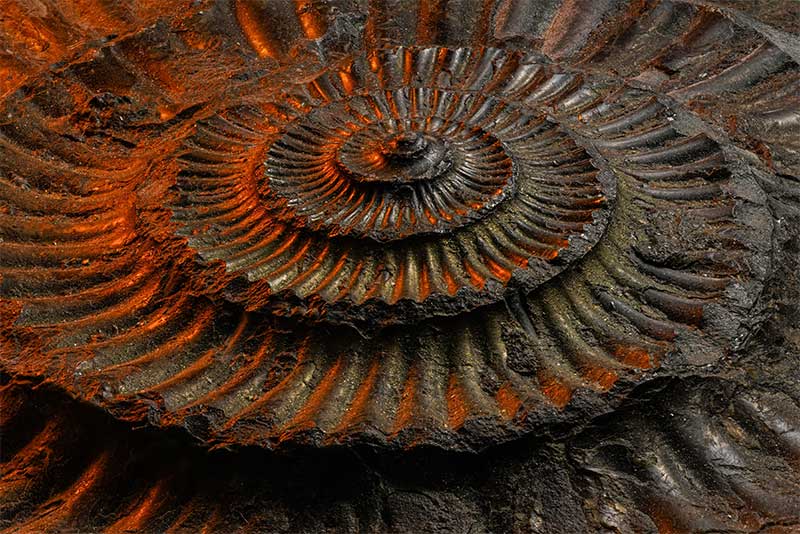
Ammonite fossil macro photography combines history, science, and creativity. These fossils may appear simple at first, but careful lighting reveals incredible detail.
Using a controlled lighting system, adjusting light placement, and experimenting with colour can transform the image completely.
With a steady setup and focus stacking, it is possible to capture every surface detail. The result is an image that brings a 180 million year old subject to life in a new way.
Remember to subscribe to our YouTube channel for regular macro photography tutorials, ideas and inspiration.

- Best Flexible LED Lighting for Macro Photography - 1st October 2026
- What’s inside your chocolate bar? – Food Macro with flexible LED Lighting - 27th September 2026
- Adaptalux Macro Lighting System vs Ring Lights for Macro Photography - 18th September 2026


