







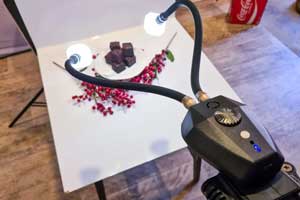






Creating a Dramatic Coin Photography with LED Macro Lighting – Watch on YouTube
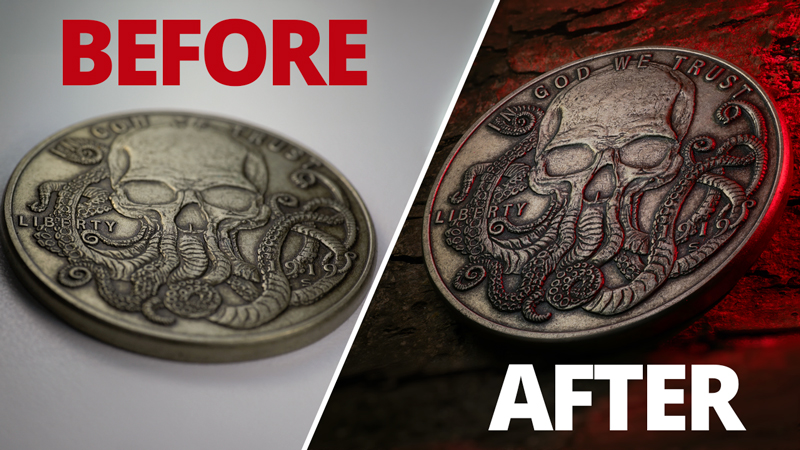
Photographing a decorative coin at macro scale is an excellent way to explore atmosphere, texture, and controlled lighting. Coins are small, reflective, and highly detailed, which makes them ideal subjects for building a strong visual style using macro photography lighting.
This guide focuses on creating a dark, nautical inspired coin image with a dramatic and slightly menacing feel. The emphasis is on mood, colour, and surface detail, rather than technical complexity. With a simple setup and careful light placement, it is possible to transform a small coin into a cinematic macro scene.
Choosing a coin that suits a strong visual style
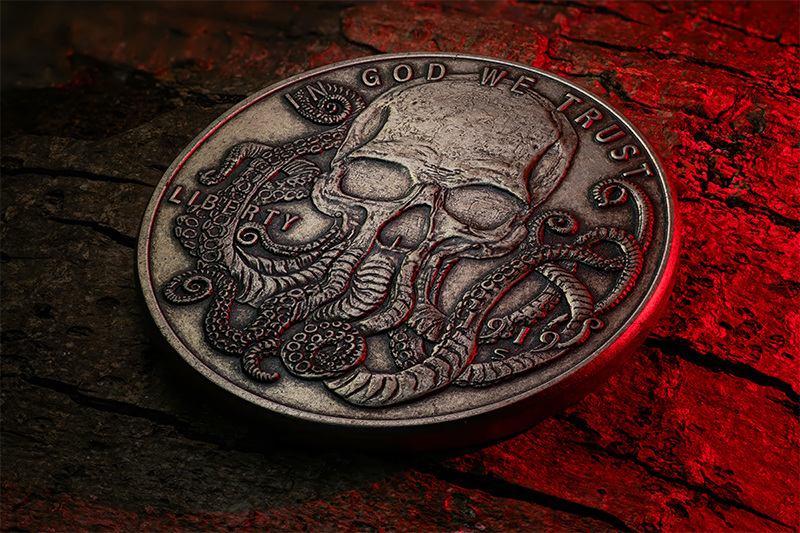
Not all coins work equally well for this type of image. A themed coin with deep engravings, raised details, and a bold central design is ideal. Nautical designs, skulls, and ornate lettering all respond well to directional light and shadow.
The metallic surface is important. It reflects light clearly, which allows lighting choices to become part of the composition. Every highlight and reflection helps shape the final look of the image.
At macro distances, even small details become dominant. This makes coins perfect for creating images that feel immersive and tactile.
Setting the foundation with macro lighting
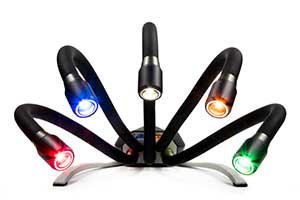
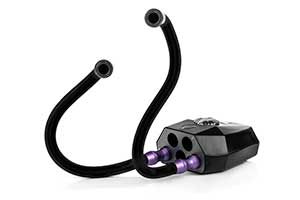
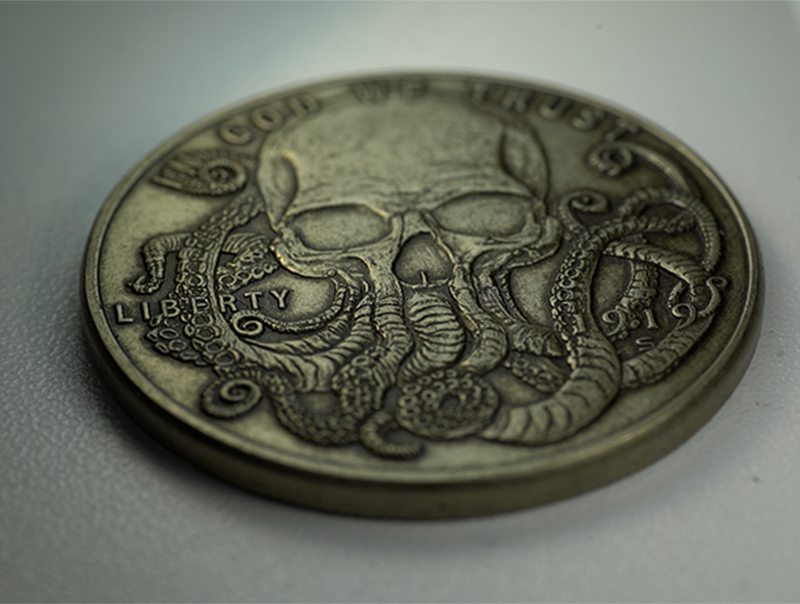
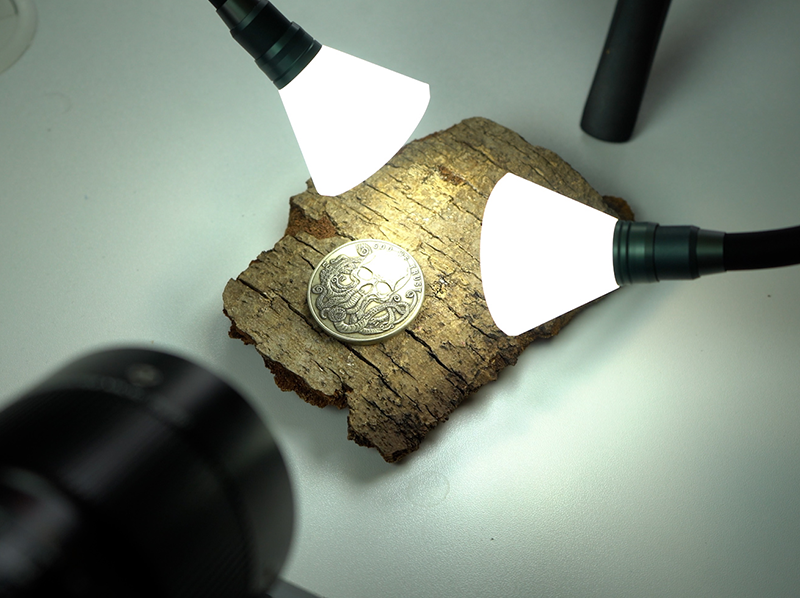
Before introducing colour or atmosphere, the subject needs to be clearly visible. A simple macro lighting setup using Adaptalux lighting arms allows precise control at close range.
Start with white light. This makes it easier to see how the light interacts with the surface of the coin. Rather than lighting the coin from the front, place one light slightly behind and to the side of the subject. This positioning allows the metallic surface to reflect the light, which reveals engraving and texture more effectively than direct illumination.
A second white light can be placed on the opposite side to gently lift shadows and prevent the image from becoming too heavy. The goal at this stage is clarity and balance, not drama.
This reflective lighting approach is essential when working with coins. The image is shaped by what the surface reflects, not by flooding the subject with light.
Building a background
A plain surface rarely suits a themed coin image. Adding a simple prop instantly gives context and depth.
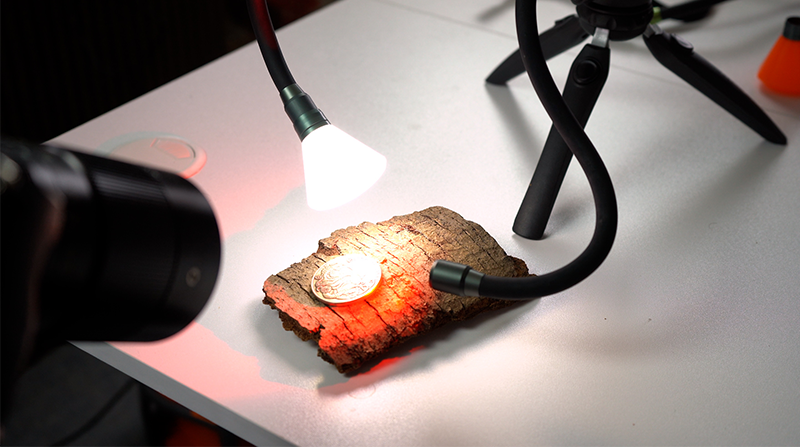
A piece of textured wood works particularly well for nautical and pirate inspired scenes. Weathered bark or dark timber adds contrast against the metal and introduces a sense of age. It also helps ground the coin within a believable environment, rather than leaving it floating in space.
Placing the coin on the wood naturally tilts it slightly towards the camera. This improves visibility of the design and adds a subtle sense of intention to the composition.
Once the background is in place, adjust the camera position and lighting to suit the new angle. At macro scale, even small changes have a noticeable impact.
Introducing colour to define the mood
With the subject and background set, colour becomes the defining element of the image. Replacing one of the white lights with a coloured Adaptalux lighting arm dramatically shifts the mood.
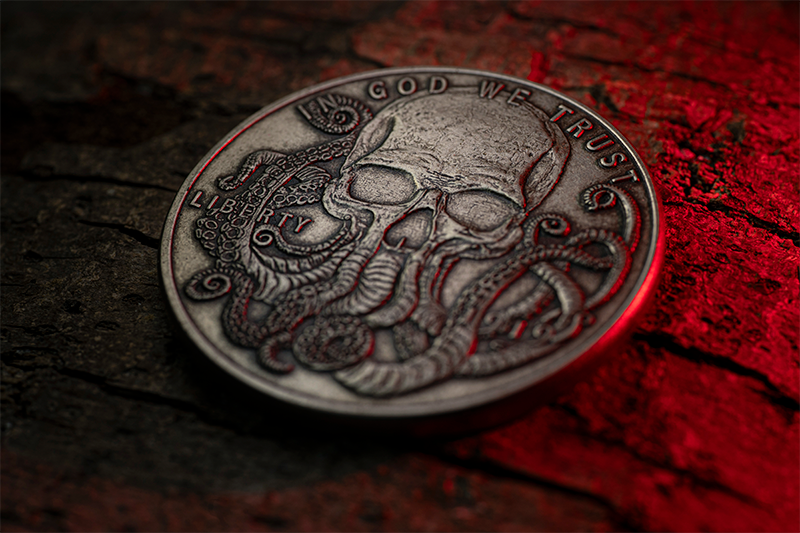
A red light placed low and undiffused creates a dark, aggressive atmosphere. It suggests firelight, danger, or something hidden below deck. The red glow spreads across both the coin and the wood, tying the elements together and reinforcing the theme.
The position of the coloured light is critical. Lower placement causes the light to skim across the surface, enhancing texture in both the coin and the background. This grazing angle emphasises relief and makes the image feel more tactile.
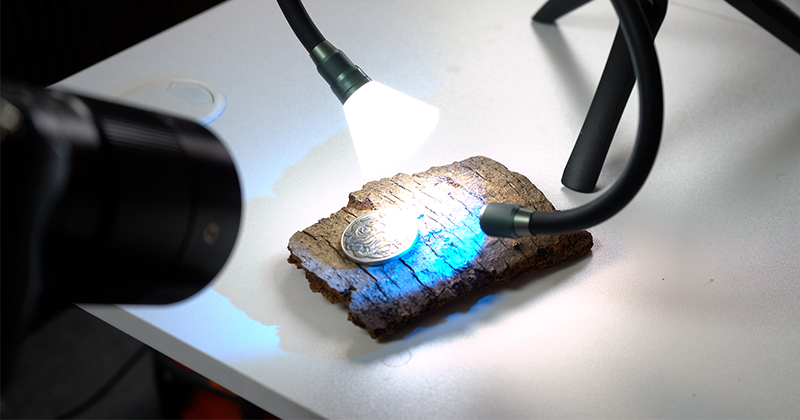
Other colours can be used, such as blue for a cooler maritime feel, but red delivers the strongest sense of drama and tension. The final choice depends on the story you want the image to tell.
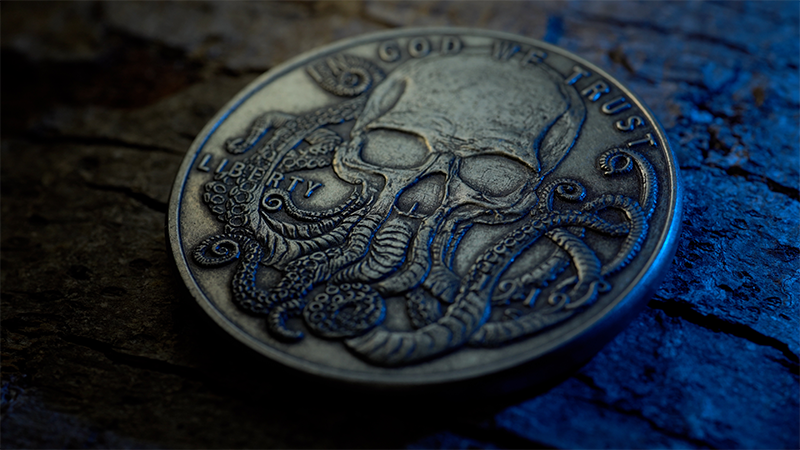
Using diffusers to control reflections
Because coins are highly reflective, reflections can quickly become distracting if left unmanaged. Diffusers play an important role here.
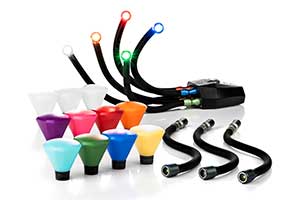
Using a diffuser on the secondary light softens highlights and prevents harsh specular reflections. Coloured diffusers can also be introduced to tint reflections subtly without overpowering the scene.
This controlled use of diffusion keeps the image cohesive. Highlights remain intentional, and the coin retains its sense of weight and realism.
Continuous LED macro lighting makes this process intuitive. Changes to light position, colour, and diffusion can be seen instantly through the camera, allowing fine adjustments without guesswork.
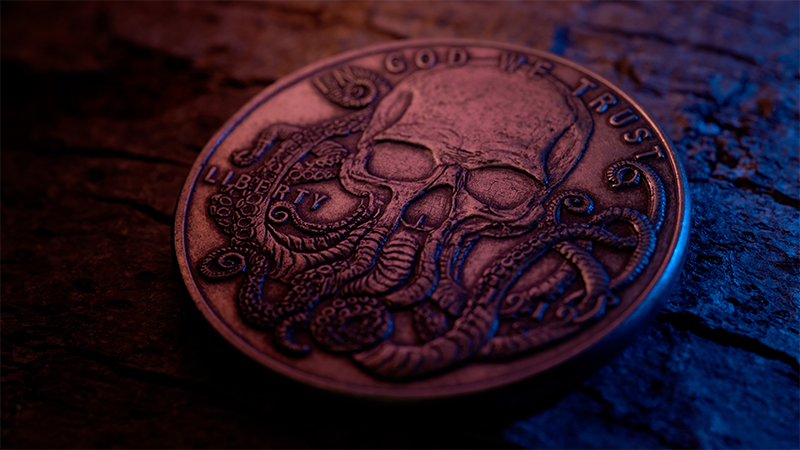
Adding smoke for atmosphere and depth
To push the image further, a small amount of smoke adds depth and movement. A portable fog machine is ideal for this, as it allows controlled bursts of smoke exactly where needed.
At macro scale, smoke behaves differently than at normal distances. It tends to cling to surfaces and linger in pockets of still air. This works beautifully with directional lighting, especially coloured light.
The smoke catches highlights and creates soft gradients between foreground and background. In a nautical themed image, it can suggest sea mist, smoke from a nearby fire, or simply add mystery and tension.
Subtle movement in the air changes how the smoke flows. This allows fine control over how much atmosphere appears in the frame. A little goes a long way.
Smoke is especially effective when combined with red light. The colour intensifies within the smoke, creating a layered, cinematic look.
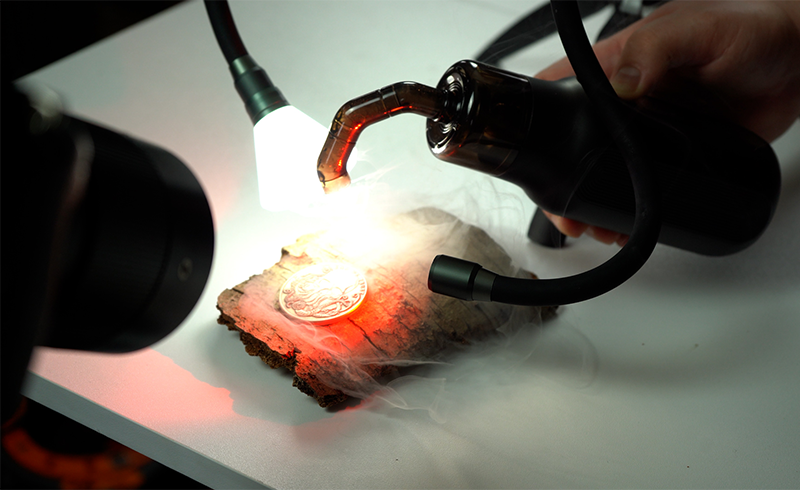
Adding smoke for atmosphere and depth
Depth of field is extremely shallow when photographing small subjects at high magnification. Even with careful aperture choices, only a small portion of the coin will be sharp in a single frame.
Focus stacking is the most reliable way to achieve sharpness across the entire subject. Multiple images are taken at different focus points and combined in post processing. This produces a final image where the engraving, edges, and background details are all clearly defined.
That said, full sharpness is not always required. A slightly softer image can feel more atmospheric and suits the aged, pirate inspired theme well. Both approaches are valid, and the choice depends on the final look you want to achieve.
The finished image is dark, textured, and dramatic. The combination of reflective macro lighting, coloured light, natural wood, and smoke creates a strong sense of place.
Nothing in the scene feels modern or clinical. The lighting is deliberate but not overly complex. Each element supports the theme rather than distracting from it.
This style works particularly well for coins with bold designs and strong symbolism. It turns a small object into a story driven image, rather than a simple record shot.
Macro photography lighting is not just about illumination. It is about shaping mood and guiding attention. With a small subject like a coin, lighting choices become the primary storytelling tool.
Remember to subscribe to our YouTube channel for regular macro photography tutorials, ideas and inspiration.

- Best Flexible LED Lighting for Macro Photography - 1st October 2026
- What’s inside your chocolate bar? – Food Macro with flexible LED Lighting - 27th September 2026
- Adaptalux Macro Lighting System vs Ring Lights for Macro Photography - 18th September 2026


