














Winter Macro Photography: Capturing Bark, Moss and Texture Outdoors – Watch on YouTube

Winter Macro Photography
Winter macro photography offers a different way to explore the outdoors. With the leaves gone and the woodland floor looking bare, it becomes easier to focus on small details that are usually hidden. Bark, moss and the natural textures found on tree trunks become clear subjects. Winter creates a simple and quiet environment, which makes it an ideal time to head out with a macro setup and experiment.
This guide looks at how to photograph trees in winter at a close range. It focuses on texture and lighting and shows how Adaptalux Lighting helps build a consistent set of tree portraits throughout the season.
Why Winter Works Well for Macro Photography
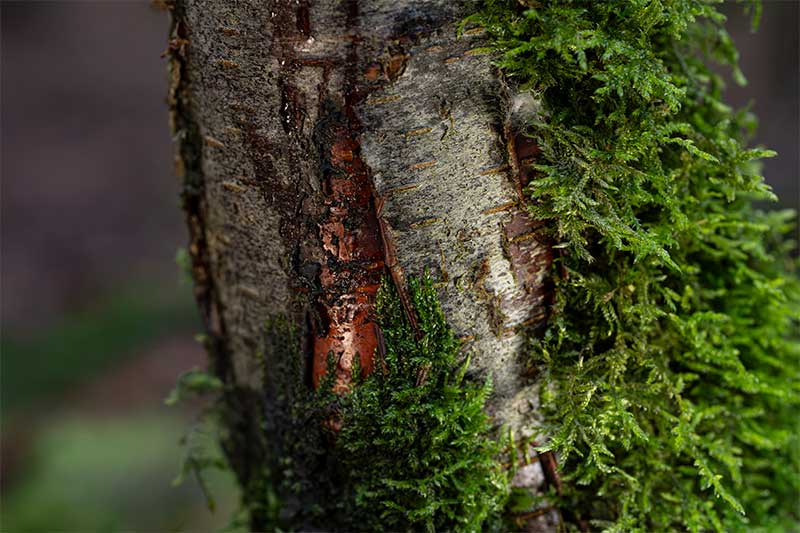
Winter macro photography encourages you to look closely at the small details that remain. Bark holds pockets of texture, and moss brings colour to an otherwise neutral palette. These subjects are easy to find and simple to photograph with a little planning.
Finding Subjects in Winter Woods
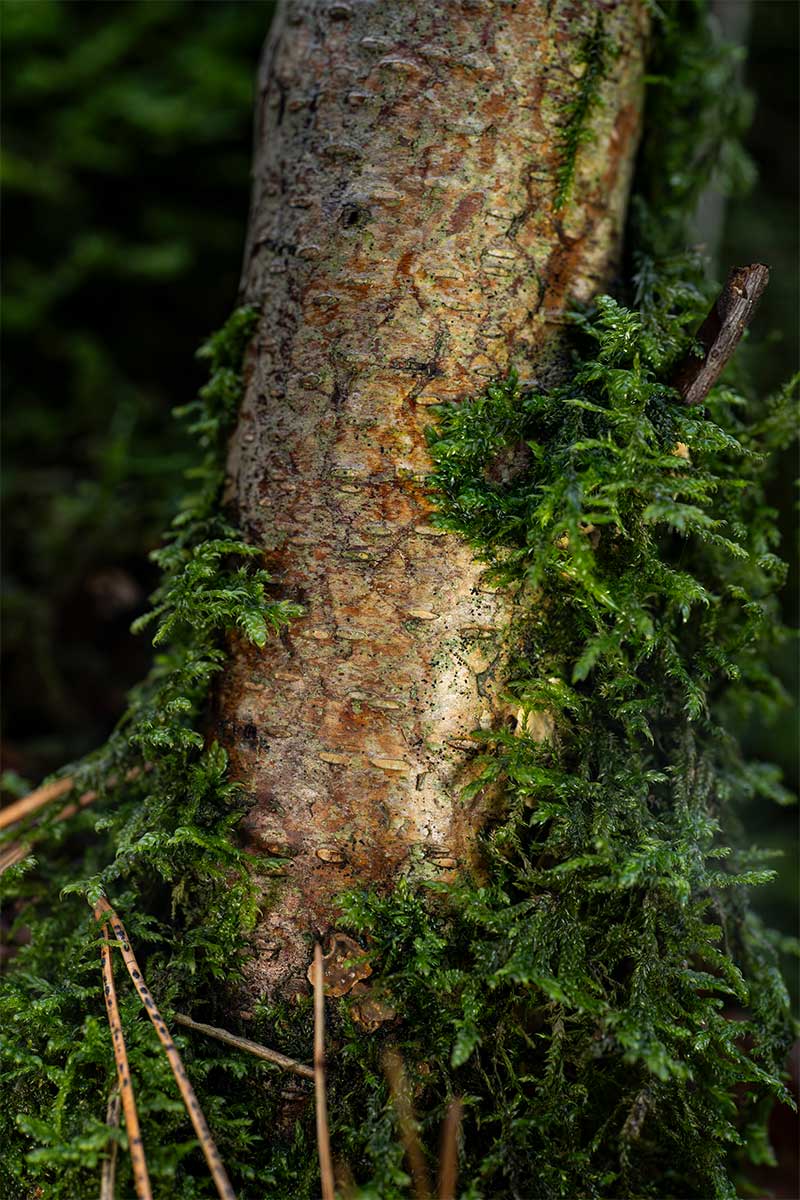
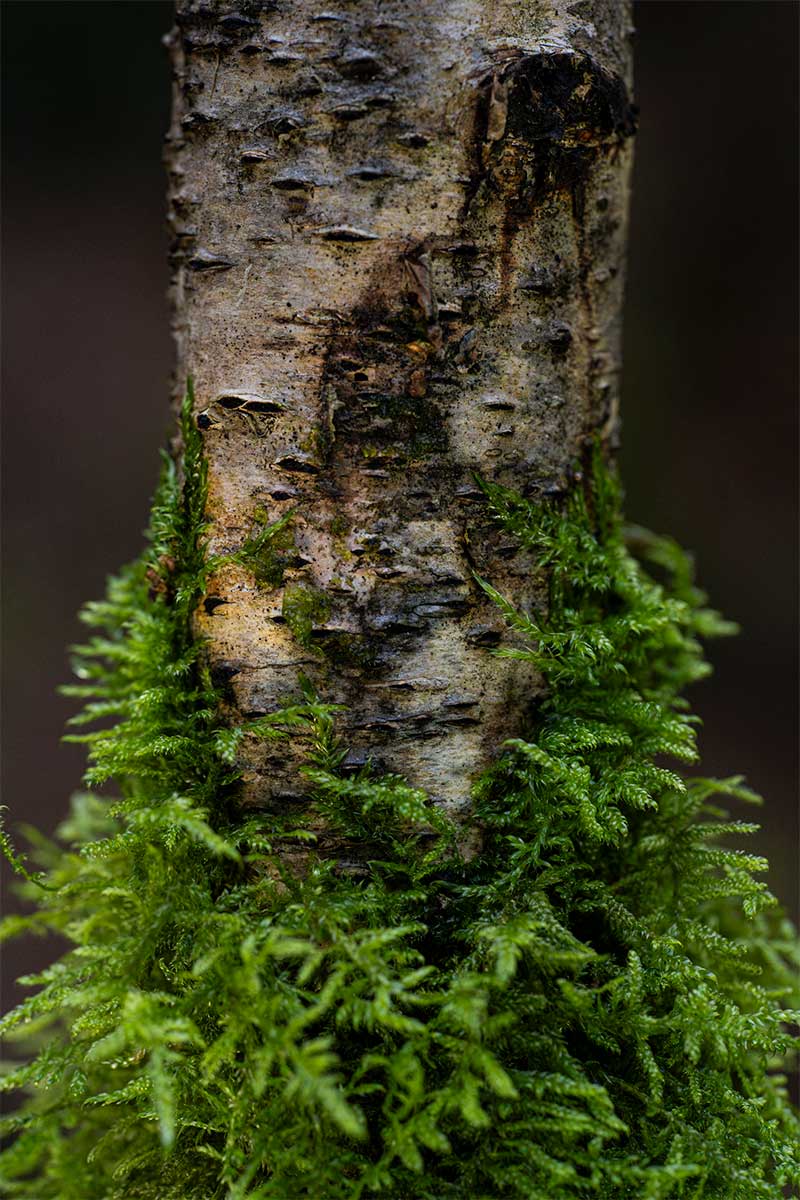
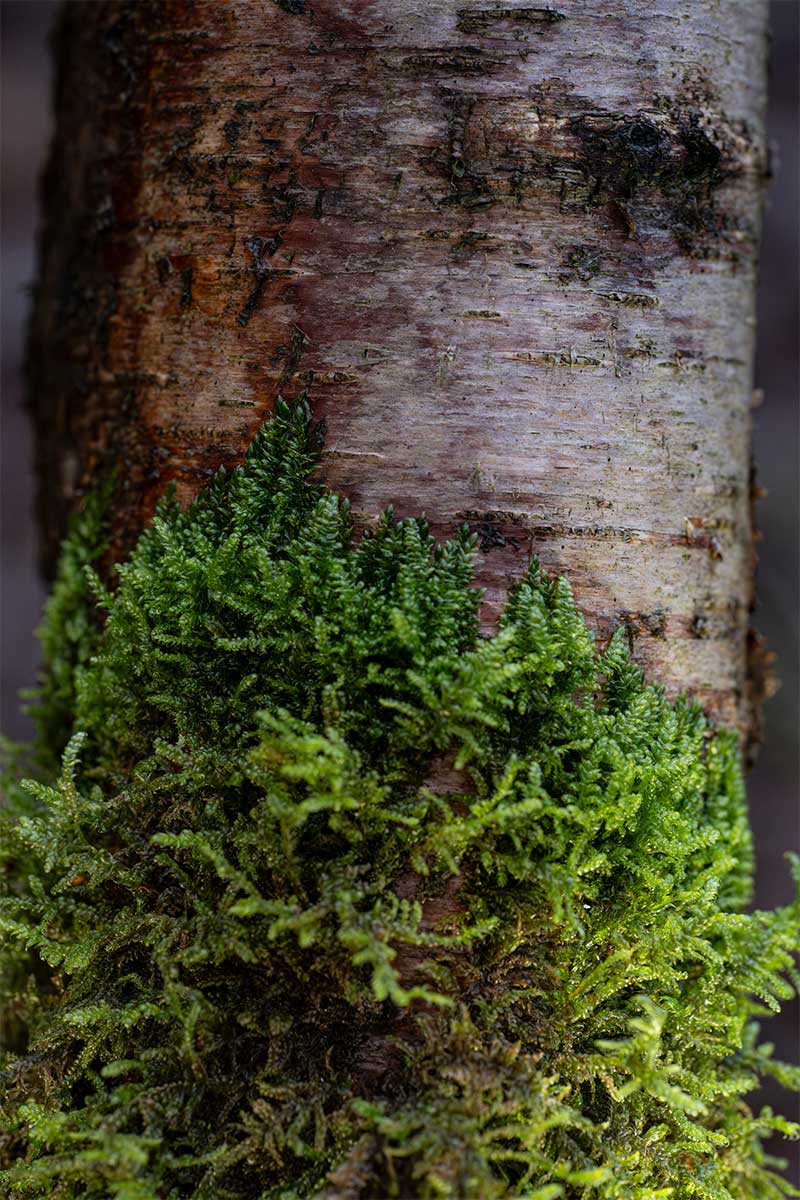
Standing close helps reveal patterns that are not visible from a distance. Try to find:
- A clean edge where moss meets the bark
- A section of bark with strong lines or curves
- A patch of colour that stands out from the rest of the trunk
- Features not shared by the rest of the trees
- Signs of animal or insect activity
Winter macro photography is less about the whole scene and more about finding a small area to focus on. The absence of foliage makes this search easier.
Using Adaptalux Lighting Outdoors
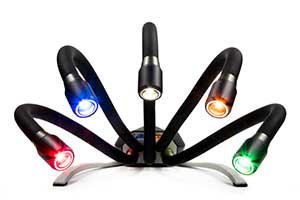
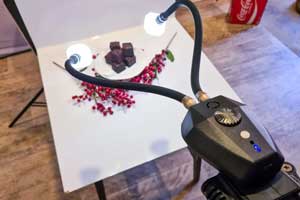
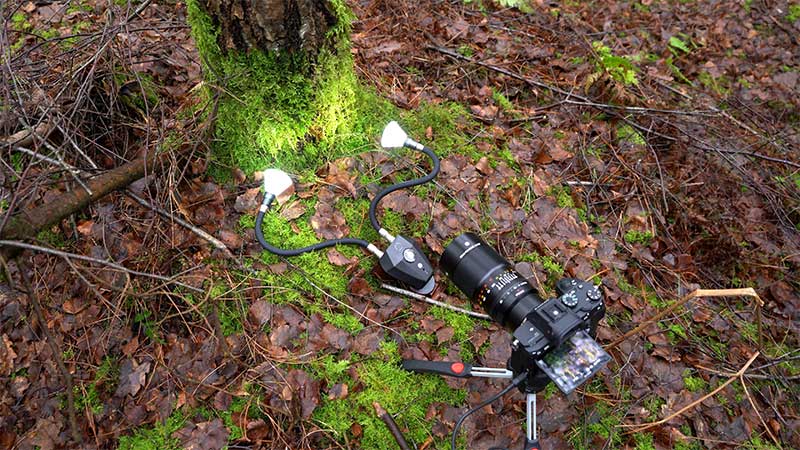
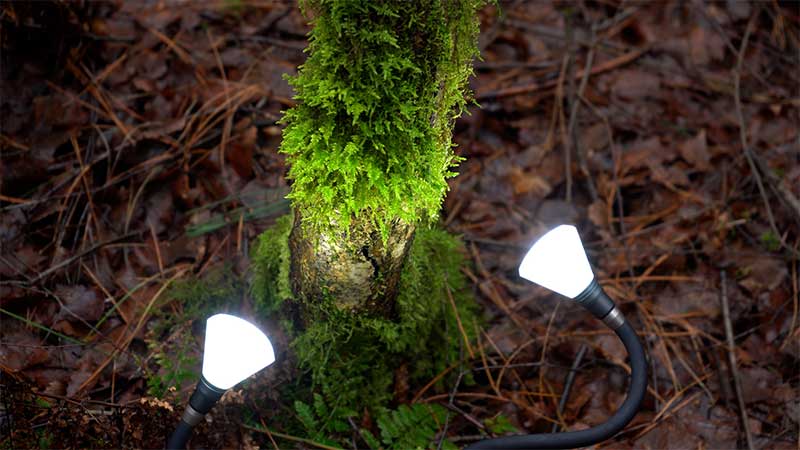
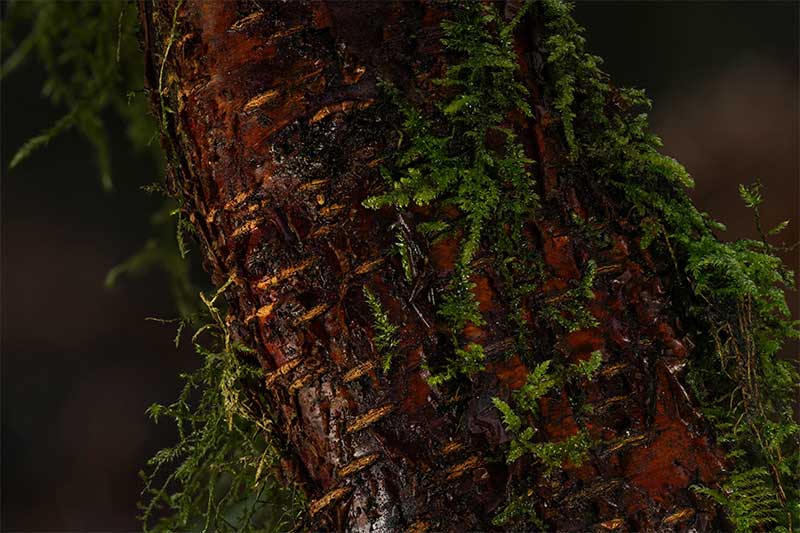
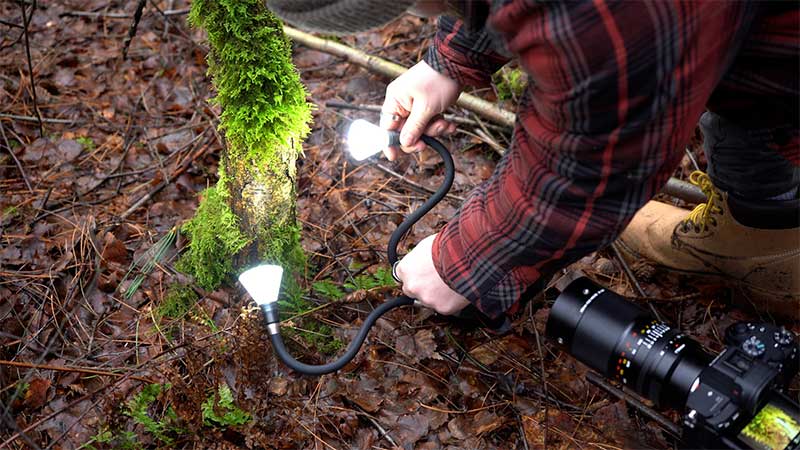
Adaptalux Lighting arms are ideal for winter macro photography because they create soft and controlled light outdoors. White Lighting Arms with diffusers provide natural-looking illumination. They brighten the moss and bring out the texture in the bark. The light is directional, but not harsh. It suits natural subjects well.
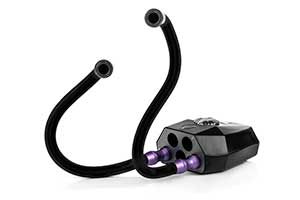
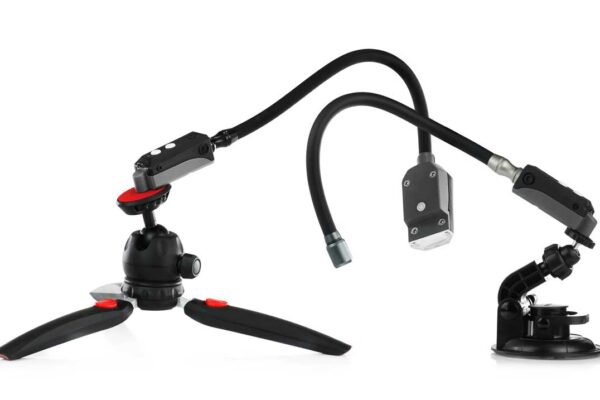
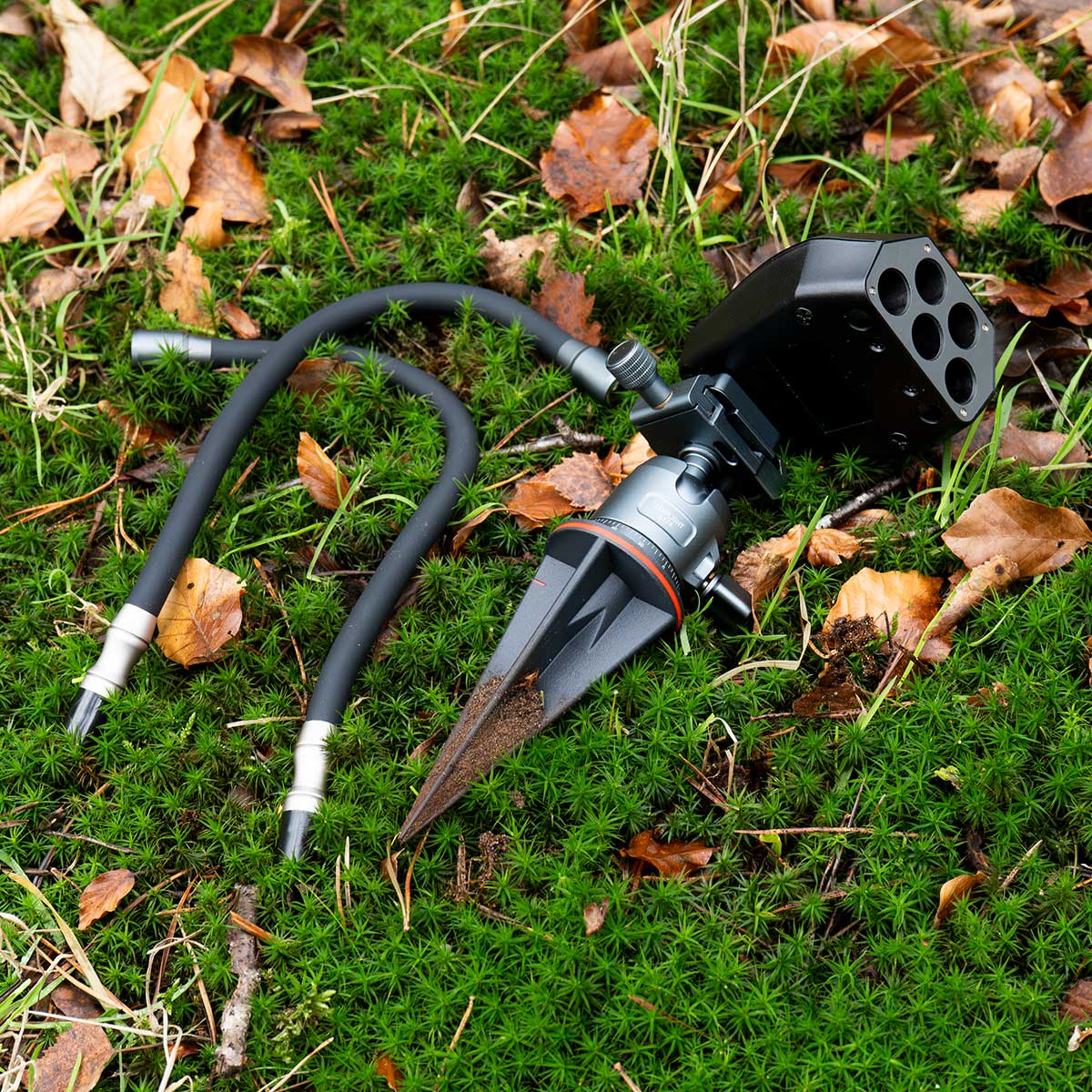
Ground Spikes make outdoor lighting easier. They push directly into the soft winter soil and hold the Control Pod securely. This removes the need for extra tripods and keeps the lighting stable even on uneven ground. The flexibility of the lighting arms allows you to adjust the direction of the light without moving the rest of the setup.
When photographing the edge between bark and moss, lighting from above and from the side helps create depth. The shadows become deeper and the green of the moss becomes stronger. Adjusting the position of the lights can change the atmosphere of the image without changing the composition.
Exploring Unexpected Details
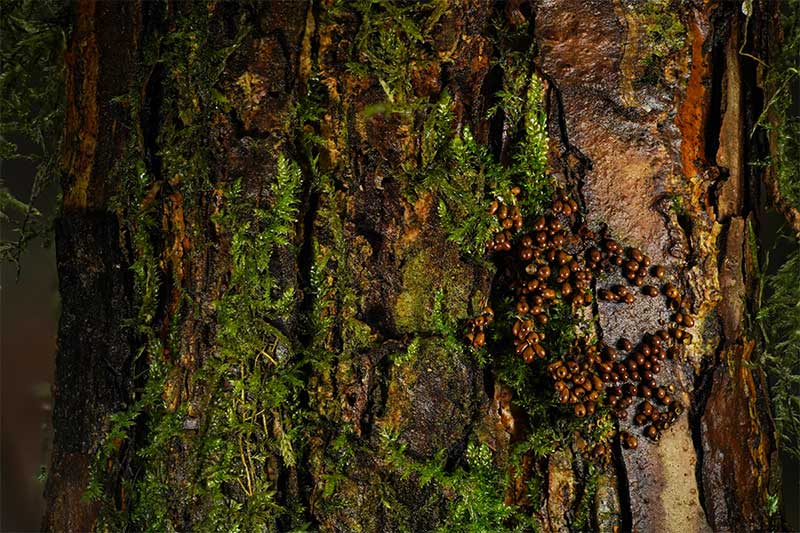
Winter often reveals small details that go unnoticed at other times of the year. Strange patterns, marks or organic structures sometimes appear on tree trunks. Even small signs of life can become interesting subjects. Winter macro photography encourages slow observation, which helps you spot these features.
If you find something unusual, adjust the lighting to highlight it. A slight change in angle can make the detail stand out more clearly. When combined with focus stacking, this produces a clean and detailed image.
Building a Tree Portrait Series in Winter
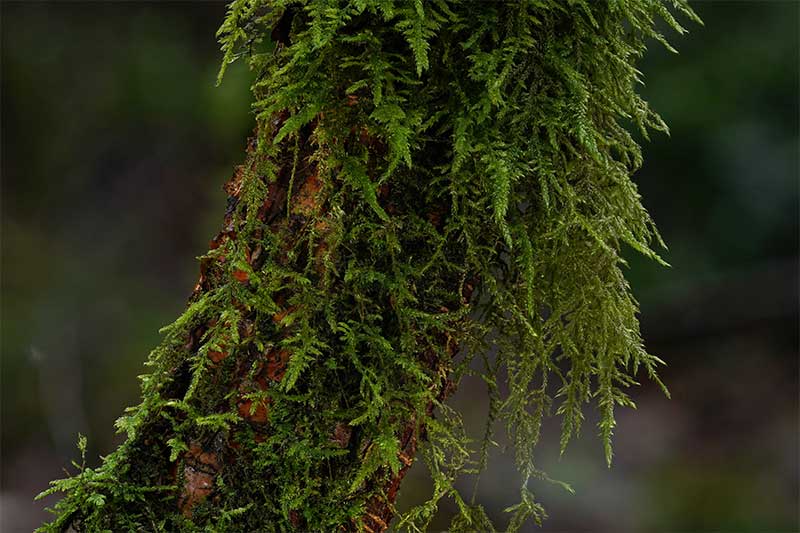
Lighting consistency helps create a series of images that feel connected. Using the same Adaptalux setup for each tree keeps the look uniform even though the subjects change. You can move from one tree to the next and repeat the process. This creates a collection of winter macro images that show the differences between each tree.
Winter woodlands are full of variation. Some trees have smooth bark, others have ridges or flakes. Moss grows in different patterns on each trunk. These differences make winter a good time to build a set of tree portraits without needing to travel far or search for perfect conditions.
Final Thoughts
Winter macro photography offers a calm and reflective way to explore a woodland. It removes distractions and highlights the textures that make up the landscape. Bark, moss and small organic shapes become the main subjects. They are simple to find and rewarding to photograph.
Using Adaptalux Lighting helps bring these textures to life. The controlled light adds clarity and depth even in flat winter conditions. With a small setup and an eye for detail, winter becomes a productive time of year for macro work.
Remember to subscribe to our YouTube channel for regular macro photography tutorials, ideas and inspiration.

- Macro Photography with Hot Glue: Alien Egg Abstracts at Home - 29th March 2026
- Adaptalux at The Photography Show 2026 – Our Biggest and Brightest Year Yet - 23rd March 2026
- Needle Macro Photography – How to Capture the Eye of a Needle (10x magnification) - 15th March 2026


