







Macro Photography with Hot Glue: Alien Egg Abstracts at Home – Watch on YouTube
Macro Photography with Hot Glue
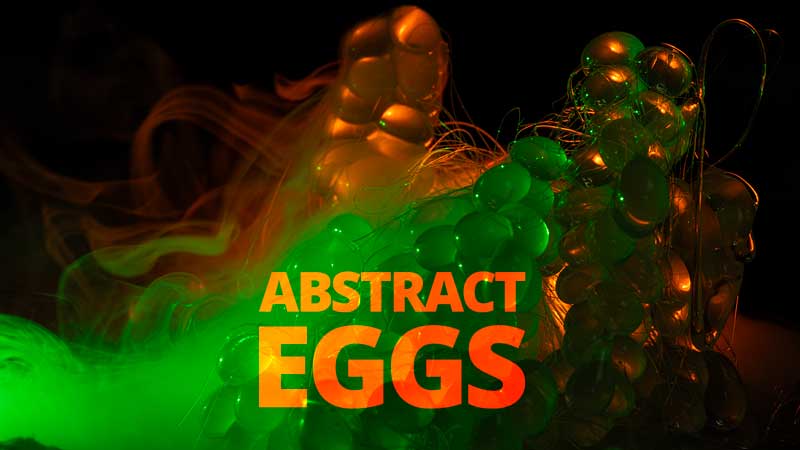
Hot glue, colourful lighting and a hint of smoke can create otherworldly scenes that look like they belong on an alien planet. This guide explores how to turn small blobs of translucent glue into detailed macro photographs with a strong cinematic mood. It uses the Adaptalux Studio to light the scene from multiple directions, and shows how colour and smoke can transform simple materials into striking abstract images.
The technique works well at home, it needs very little equipment and creates endless possibilities for experimentation.
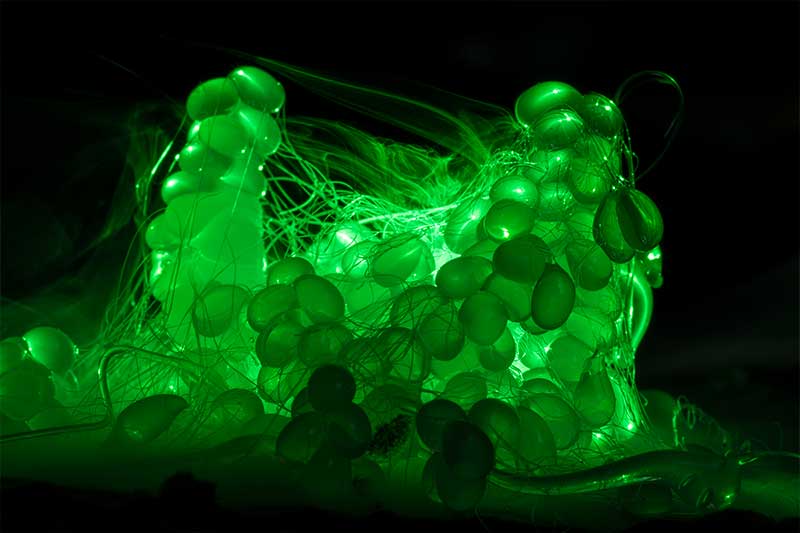
Finding a Subject in Hot Glue
Hot glue naturally forms rounded drops when it cools. When several drops build up on the same piece of cardboard, they stack into strange translucent shapes. Over time they begin to look like clusters of eggs. Some have narrow strands of glue stretching between them, which adds to their unusual texture.
You can deliberately create this subject by letting a glue gun drip onto card. Let the glue fall naturally and form uneven layers. Slow drips create larger globules, while strands appear when the glue stretches between drops.
The translucent quality of cooled hot glue makes it ideal for backlighting. Colour shines through the material and reveals details beneath the surface, which is perfect for abstract macro work.
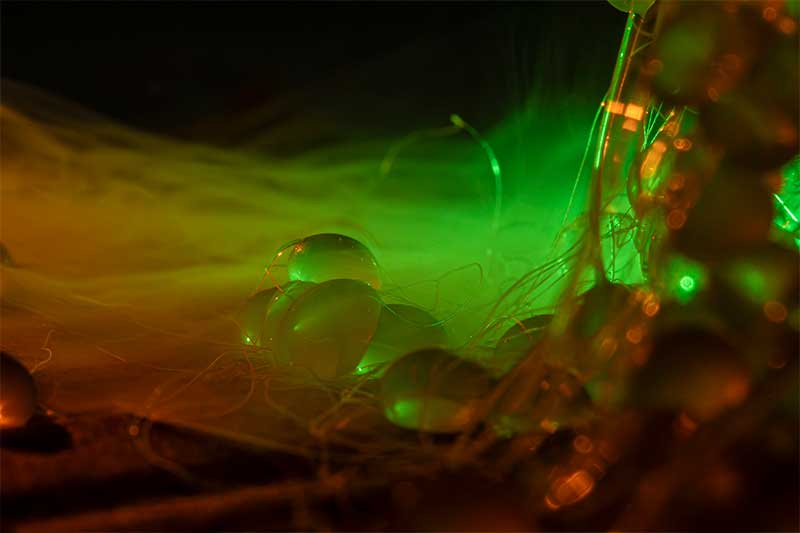
Choosing a Composition
Place the glue clusters on a simple background. Card works well because it makes the whole scene easy to move around. Keep the camera low and level with the glue. This view makes the scene feel more immersive and highlights the shapes.
Instead of moving the camera, try rotating or shifting the glue itself. This makes it easier to explore angles and search for openings between the globules. Gaps often create a natural place for smoke or bright backlighting.
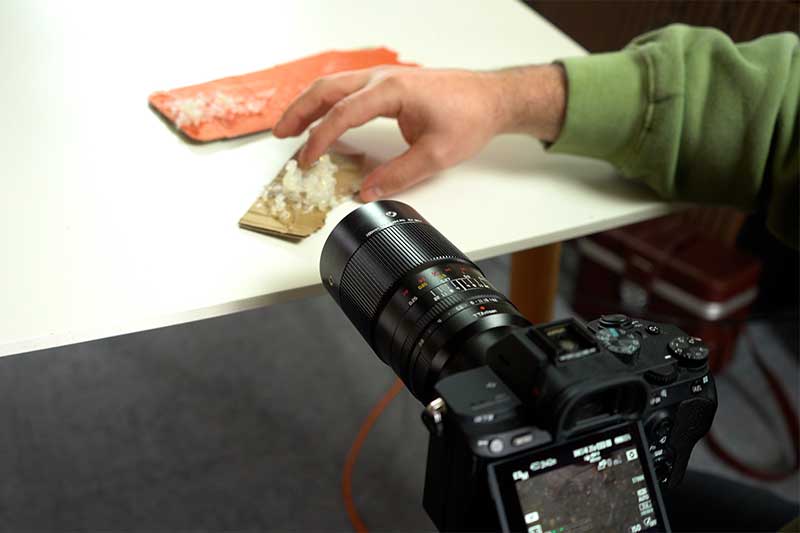
Lighting the Scene with the Adaptalux Studio
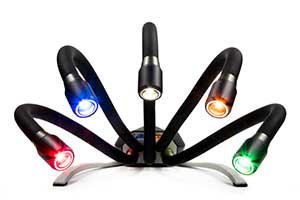
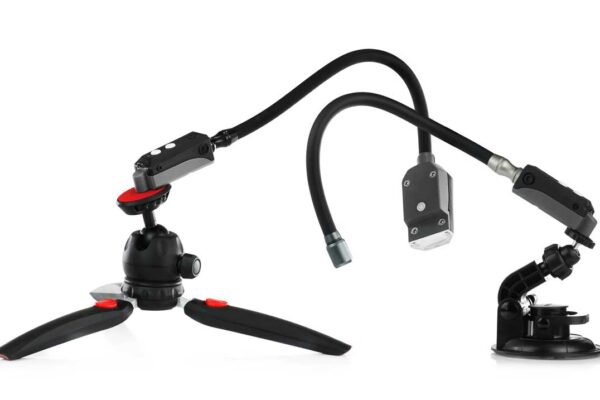
The Adaptalux Studio is well suited to lighting translucent subjects. Lighting Arms can be positioned with precision, and different colours create strong contrasts and moods.
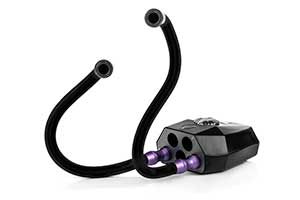
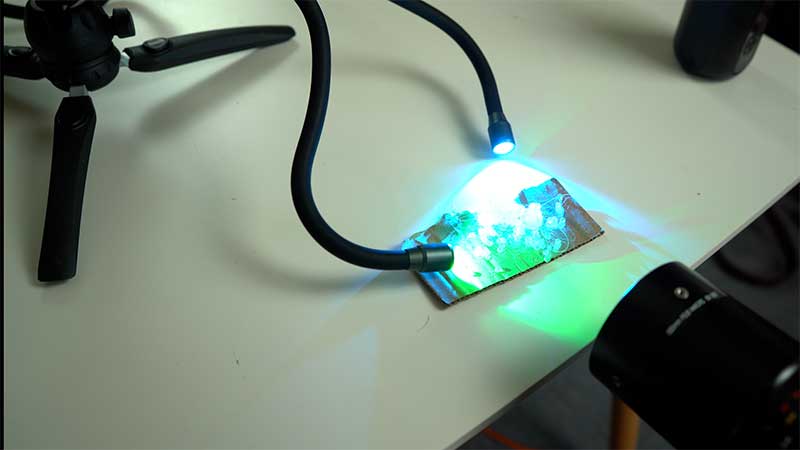
Start by placing the Control Pod on a mini tripod behind the subject. This lifts the lights from the surface and makes it easy to shine colour through the glue from underneath.
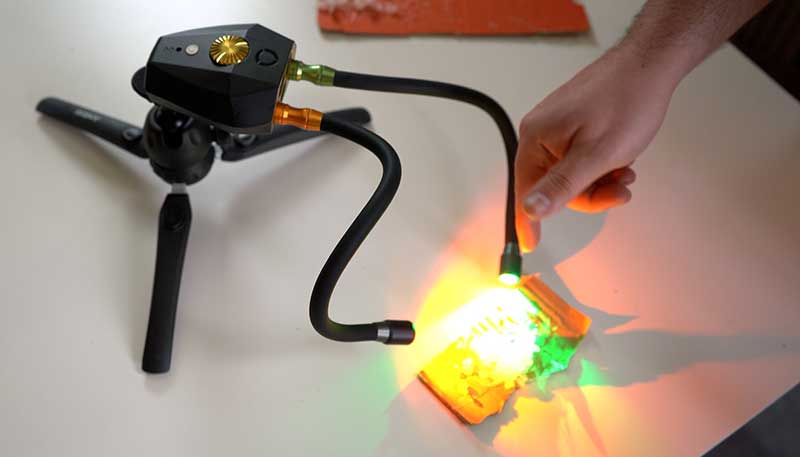
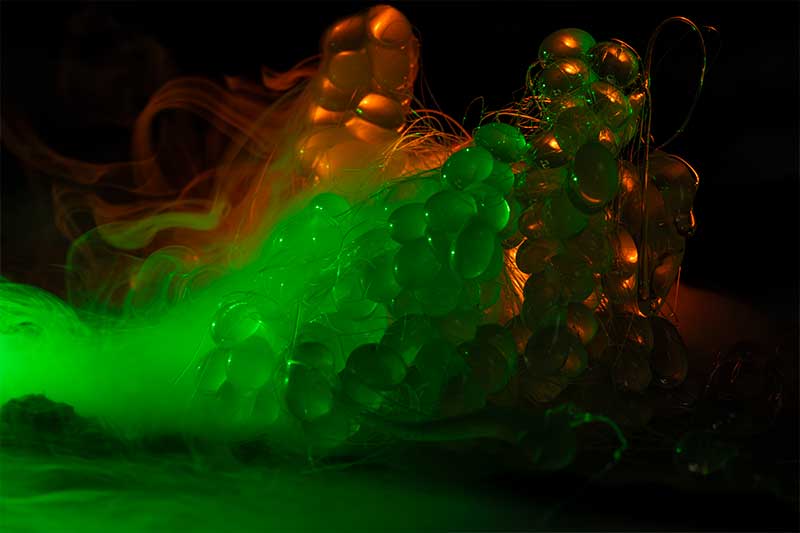
A green Lighting Arm works well as a first light. Bend the arm so the light shines from behind and slightly around the glue. This brings out its translucent qualities and makes it glow from within.
To add contrast, introduce an amber Lighting Arm from the opposite side. Place this one more towards the side rather than behind. The amber light creates warm highlights, while the green remains strong inside the glue.
This combination gives the impression of something glowing in a dark environment, perhaps an alien nest or a laboratory experiment. Backlighting keeps reflections to a minimum, which is important because shiny glue surfaces can easily reflect frontal light.
Adding Smoke for Atmosphere
A small portable fog machine can introduce gentle smoke into the scene. Use it sparingly for still images. A low setting produces slow‑moving wisps that remain visible long enough to capture.
Aim to fill an empty part of the frame with smoke. Backlighting that area with the amber arm creates soft golden tones. The green light still illuminates the glue, so the scene becomes a mix of glowing green forms and orange smoke.
For video clips, heavier smoke works well because it moves as you shoot. For stills, lighter smoke gives you more time to position the camera and wait for the right moment.
Changing the Feel with Colour
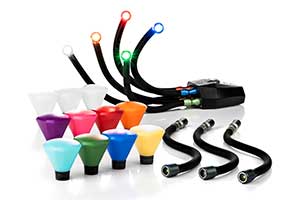
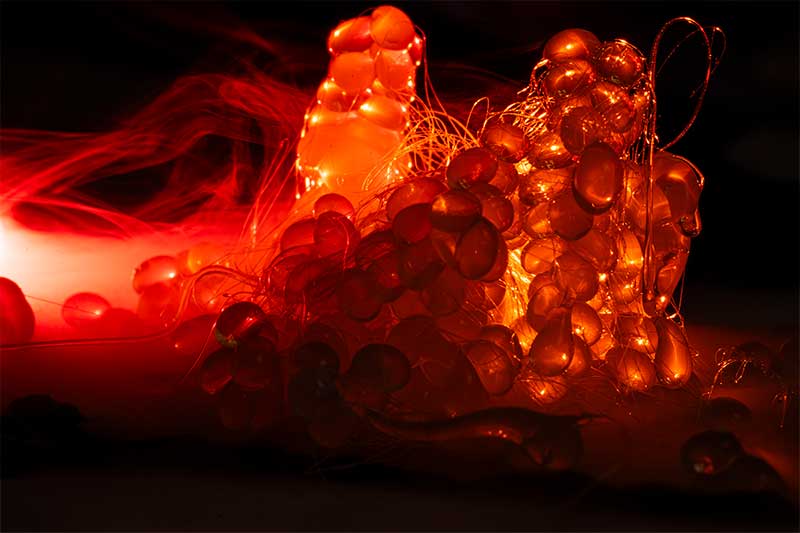
One of the strengths of the Adaptalux Studio is how quickly colours can be swapped. Changing the Lighting Arms can completely alter the mood of the photograph.
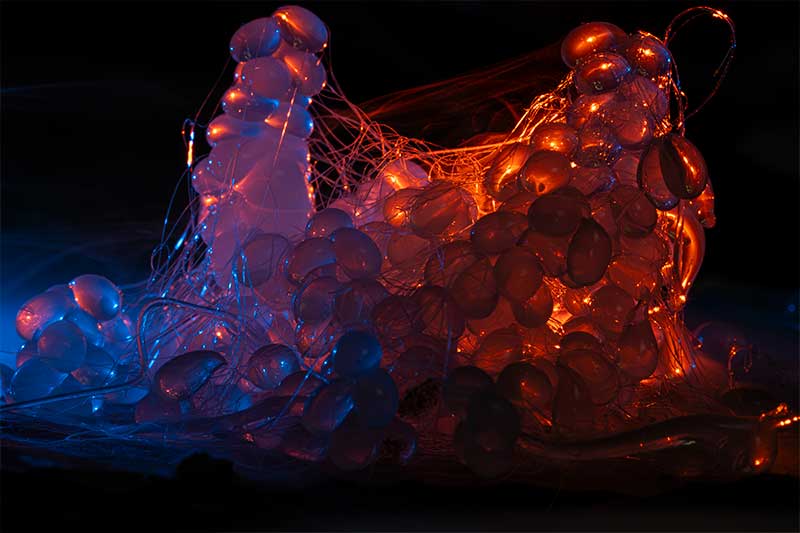
Replacing green with blue, and amber with red, creates a colder and more dramatic look. The strong contrast between the two colours feels more intense, as if the eggs are sitting in a hostile or dangerous environment.
Blue and green together give a softer and more aquatic style. This combination makes the glue look like fish eggs at the bottom of the sea. The translucent quality suits this underwater appearance, especially when the green highlights blend with the blue shadows.
For a more clinical or unsettling image, use white lights instead of colour. Backlit white light makes the glue look more organic. It emphasises the shiny surfaces and gives a stark, slightly unpleasant realism that stands out well in macro images
Hot glue is a cheap and accessible material, yet it reacts beautifully to coloured lighting. Its surface is glossy, but its interior scatters light in soft diffused patches. This combination gives depth to the subject.
The glue also hardens into unique shapes that cannot be easily predicted or repeated. Every cluster looks different, which makes the technique ideal for creative exploration.
With the right lighting, the glue transforms into something completely unrecognisable. It can look biological, alien or aquatic depending on the colours and composition.
Macro photography with hot glue is a simple way to create imaginative and cinematic abstract images at home. The Adaptalux Studio makes lighting straightforward and flexible, and coloured Lighting Arms give you near‑endless creative control. Smoke adds movement and atmosphere, turning a basic subject into an engaging scene.
Remember to subscribe to our YouTube channel for regular macro photography tutorials, ideas and inspiration.

- Macro Photography with Hot Glue: Alien Egg Abstracts at Home - 29th March 2026
- Adaptalux at The Photography Show 2026 – Our Biggest and Brightest Year Yet - 23rd March 2026
- Needle Macro Photography – How to Capture the Eye of a Needle (10x magnification) - 15th March 2026


